
Care Home Lead Generation
6 Lead Generation Strategies to Boost Care Home Occupancy
Lead generation for care homes works best when six channels feed each other. One channel alone leaves gaps. That is the short answer.
Here is the part nobody puts on a slide. Your beds sit empty while the admissions team refreshes the inbox. A referral source that sent four families last quarter has gone quiet. Nobody called to explain why. Meanwhile, a community eight miles away keeps filling rooms.
This guide covers six channels that close that gap. SEO, Google Ads, Facebook Ads, social media, your website, and email. Each one gets the same treatment. What it does, what it costs in time and money, and where it falls short. Then you get a straight answer on which to start first.
What Lead Generation for Care Homes Really Involves
A lead is not everyone who lands on your site. A lead is a family that raised a hand. They called, filled a form, or booked a tour. Everyone else is just traffic.
The gap between an inquiry and a qualified inquiry eats your week. Some families live three states away. Others get priced out at the first number you quote. A few are planning for a parent who is fine for another year. Your admissions coordinator still spends 20 minutes on each call.
Now the part most marketing advice skips. You are rarely selling to the resident. You are selling to a 54-year-old daughter with a full-time job and two kids. She makes the call, books the tour, and signs the paperwork. Write every page for her.
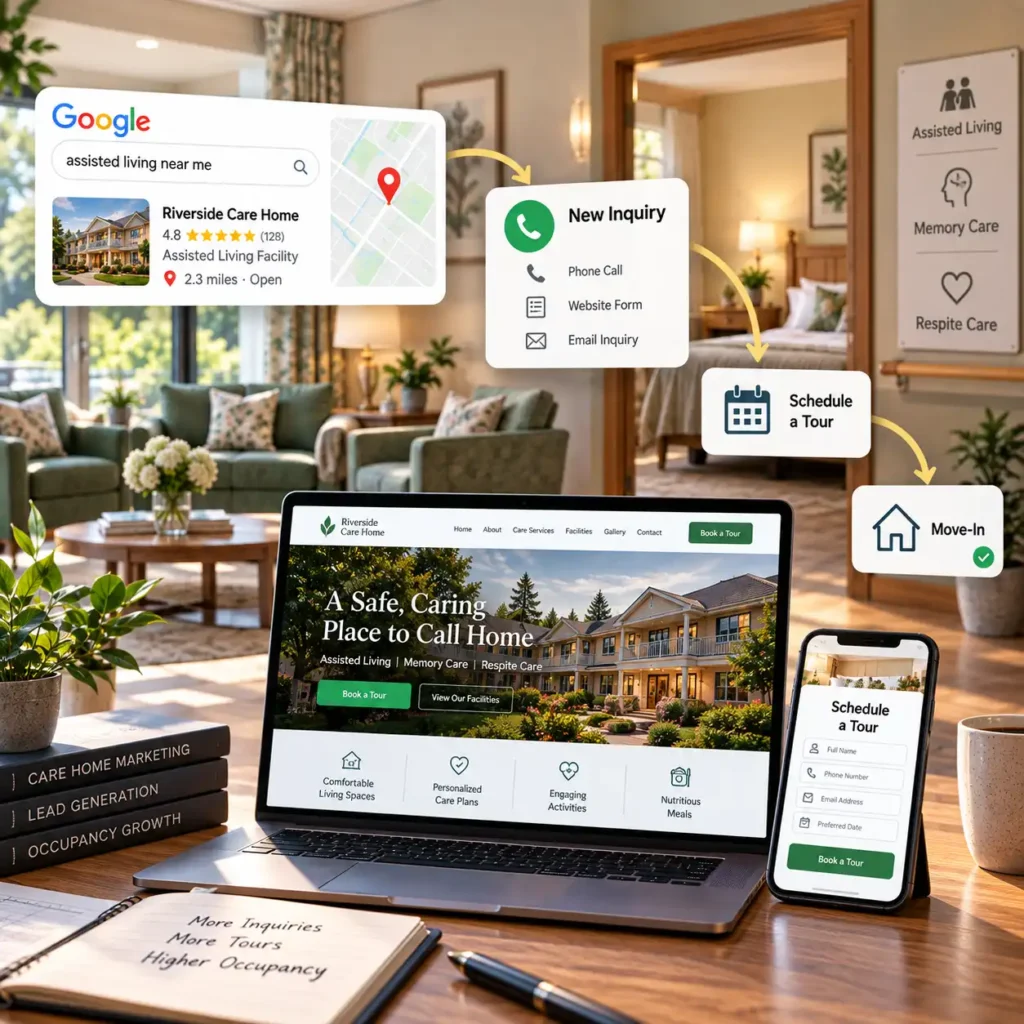
Why Empty Beds Cost More Than Most Operators Realize
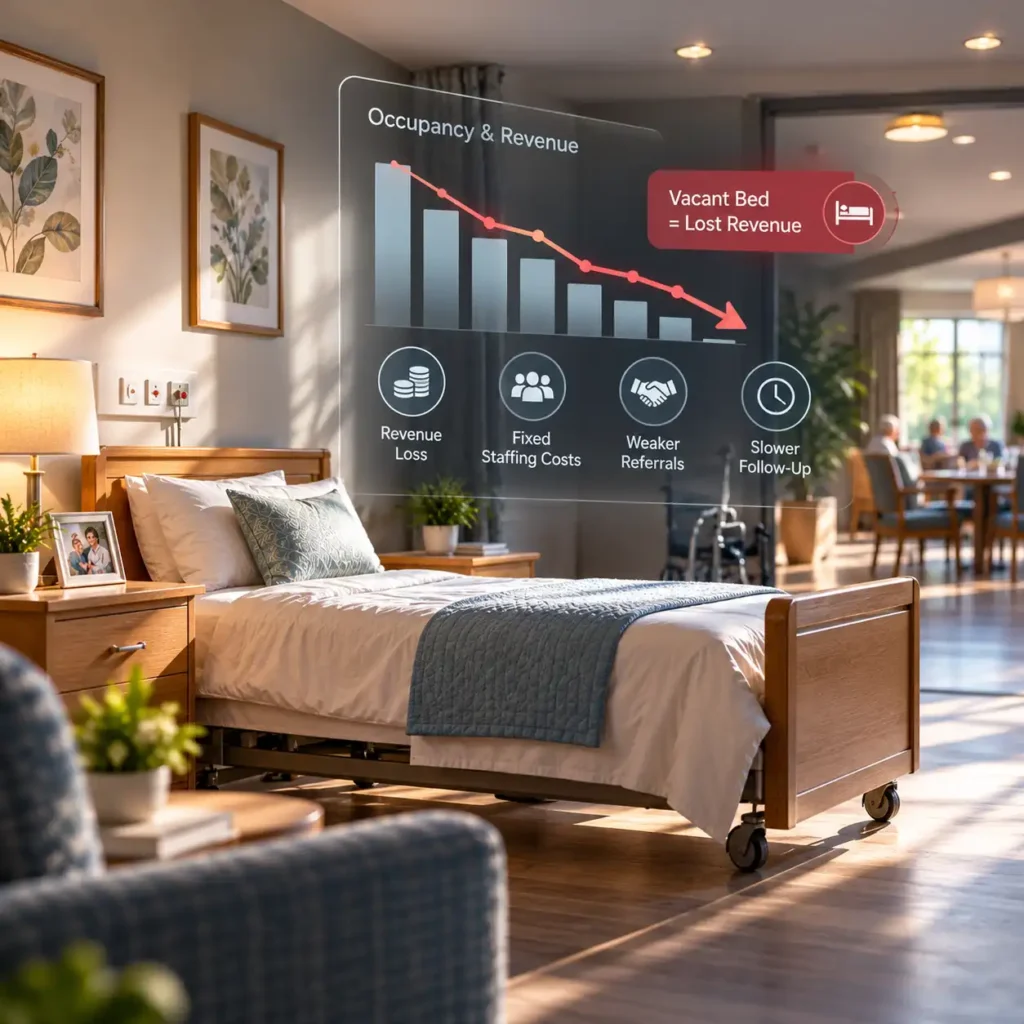
One empty bed costs more than the rate card shows. Genworth’s cost of care data puts the US median for assisted living above $5,000 a month. A room vacant for 90 days is revenue you never bill. It does not roll forward.
The second cost hides in your staffing sheet. Ratios hold whether the bed is full or not. Revenue drops. Payroll does not. Margin shrinks faster than census does, so a five-point dip stings harder than the number looks.
What a single vacancy drags down:
- Monthly revenue you cannot bill later
- Fixed staffing costs spread across fewer residents
- Weaker leverage with referral partners who watch your census
- Slower follow-up when a real inquiry finally lands
There is a timing problem underneath all of this. Families research for six months to a year before anyone moves. Show up only at the crisis, and you compete on availability alone. Start earlier, and you increase care home occupancy without discounting your rate.
6 Lead Generation Strategies to Boost Care Home Occupancy
These six are ordered by how fast they pay off, not by how much they matter. Google Ads can ring your phone this week. SEO takes a season. You do not need all six running on day one. Pick two, run them properly, then add the next.
1. Local SEO That Puts You in the Map Pack
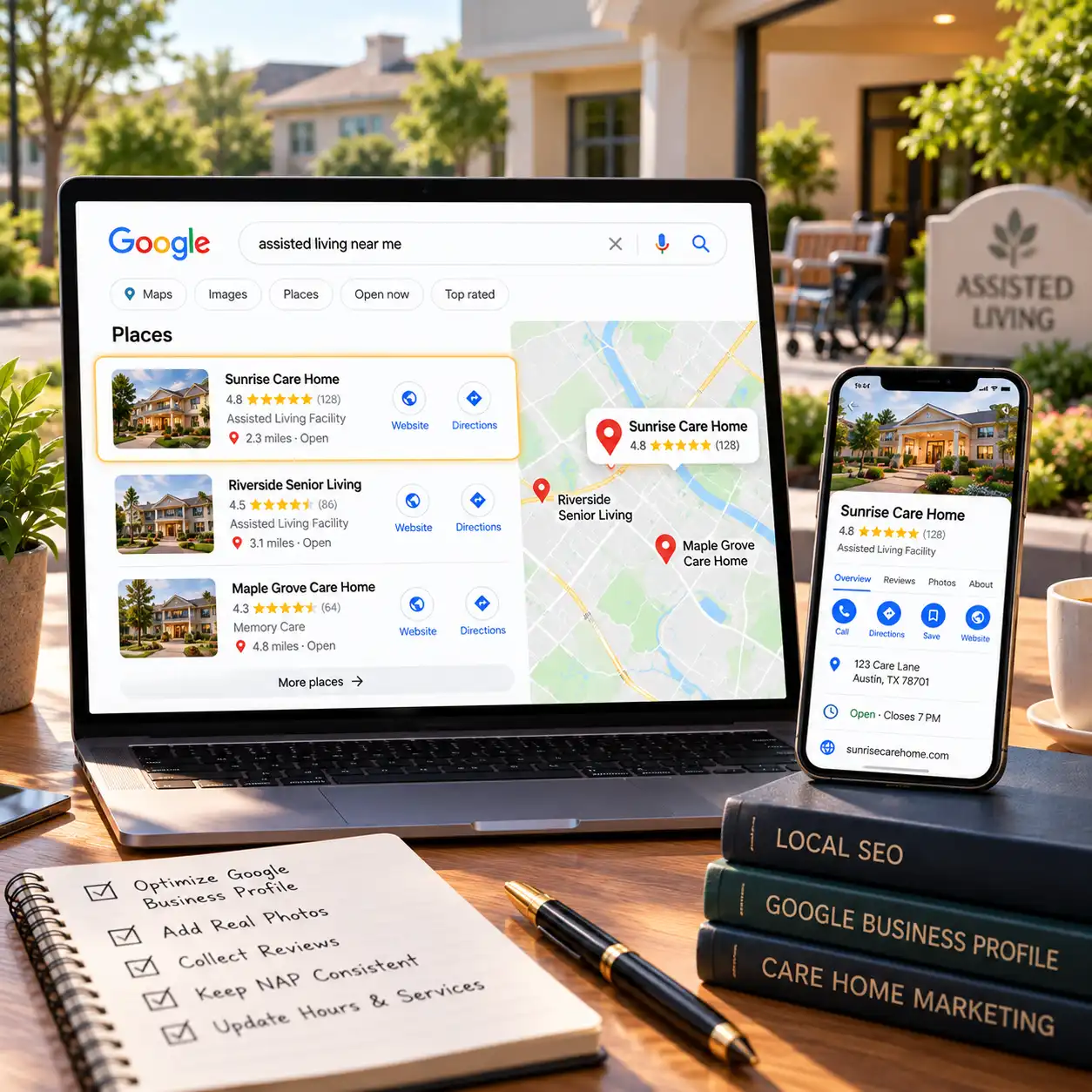
Families search on their phones, and they search local. Assisted living near me. Memory care in Tulsa. Respite care with weekend openings. The map pack takes most of those clicks before anyone scrolls.
Your Google Business Profile is the battleground, not your homepage. List every care type you offer. Upload real photos of the dining room and a resident suite. Keep hours right, including weekend tour hours. Half the profiles in this industry still show a stock lobby shot from 2019.
Reviews are the hard part here. Families are emotionally drained by the time they move a parent. Asking on move-in day feels wrong, because it is. Ask at 30 to 60 days, once the daughter has seen her dad settled and eating again. That window works better than any script.
Fix these first:
- Complete your Google Business Profile with care types and real photos
- Keep name, address, and phone identical on every listing
- Build a separate page for each community you operate
- Ask for reviews on a set schedule, not when someone remembers
- Reply to every review, especially the angry ones
Now the tradeoff. Local SEO takes three to six months to move anything. It is the cheapest channel you will ever run and the slowest to start. Plant it now.
2. Google Ads for Families Searching Right Now
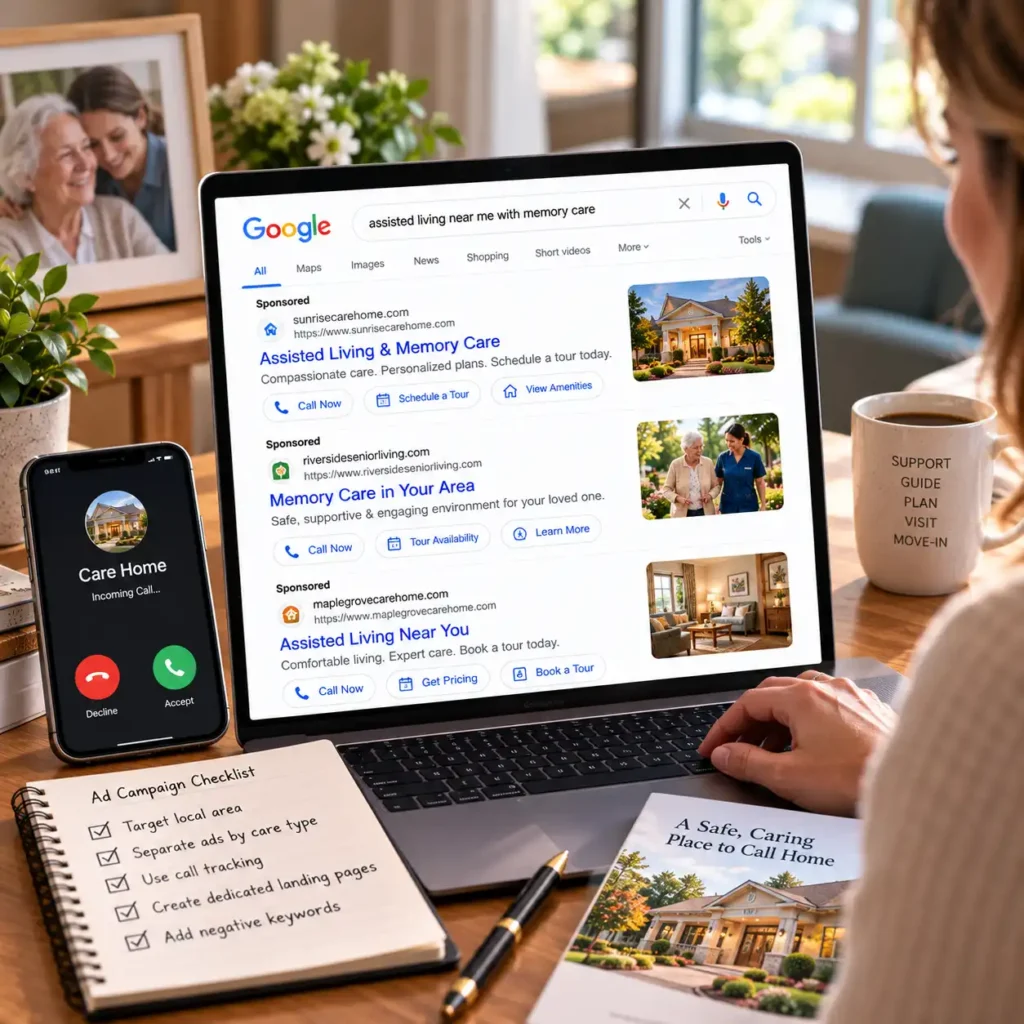
Google Ads buys you what SEO makes you wait for. Someone typing “assisted living near me with memory care” is not browsing. Dad fell last Tuesday. The hospital wants a discharge plan by Friday. That family calls one of the first three results and stops looking.
Tight geography matters more than budget size. A 10 to 15 mile radius around each building beats a statewide campaign every time. Split ad groups by care type too. Assisted living, memory care, and respite buyers need different pages and different copy.
Negative keywords protect care home marketing budgets. Skip them and you pay for job seekers all month long.
Set these up before you spend a dollar:
- A 10 to 15 mile radius around each community
- Separate ad groups for assisted living, memory care, and respite
- Call tracking on every ad, since most families dial instead of typing
- A negative list covering jobs, salary, careers, and Medicaid-only terms
Now the honest part. Senior care clicks run expensive in most US metros, often past $10 each. And the day you pause the campaign, the phone goes quiet. You are renting this one.
3. Facebook Ads That Reach the Adult Children
Nobody opens Facebook looking for a care home. That is exactly the point. The 52-year-old daughter who has worried about her dad for eight months is scrolling at 11pm. She has not searched anything yet. Google cannot reach her. Facebook can.
Targeting here has limits you should know upfront. Meta restricts some options in sensitive categories, so the old detailed targeting playbook no longer works. Lean on location, age bands, and caregiving interests instead. Keep the radius tight.
Creative decides everything on this platform. A real photo of your common room beats a stock image of smiling seniors. Video tours pull the best because they kill the fear of the unknown.
Formats worth testing:
- Short video walkthroughs shot on a phone, not by a crew
- Lead forms offering a pricing guide or a tour question checklist
- Retargeting for anyone who viewed your pricing or tour page
- Caregiver support posts that build trust before any ask
One caution. Senior care leads from Facebook arrive colder than search leads. Many sit eight months from a decision. Without a follow-up system, most of them go nowhere. That is what the sixth strategy fixes.
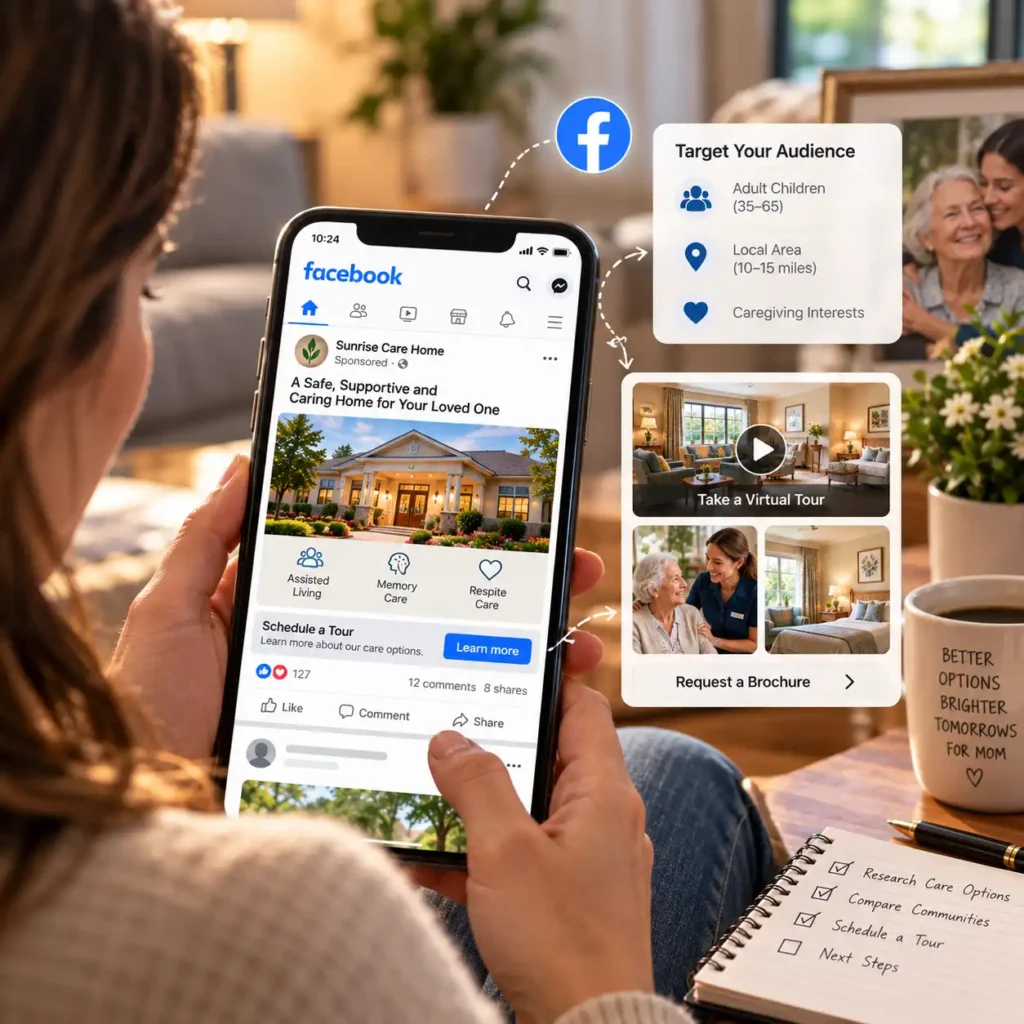
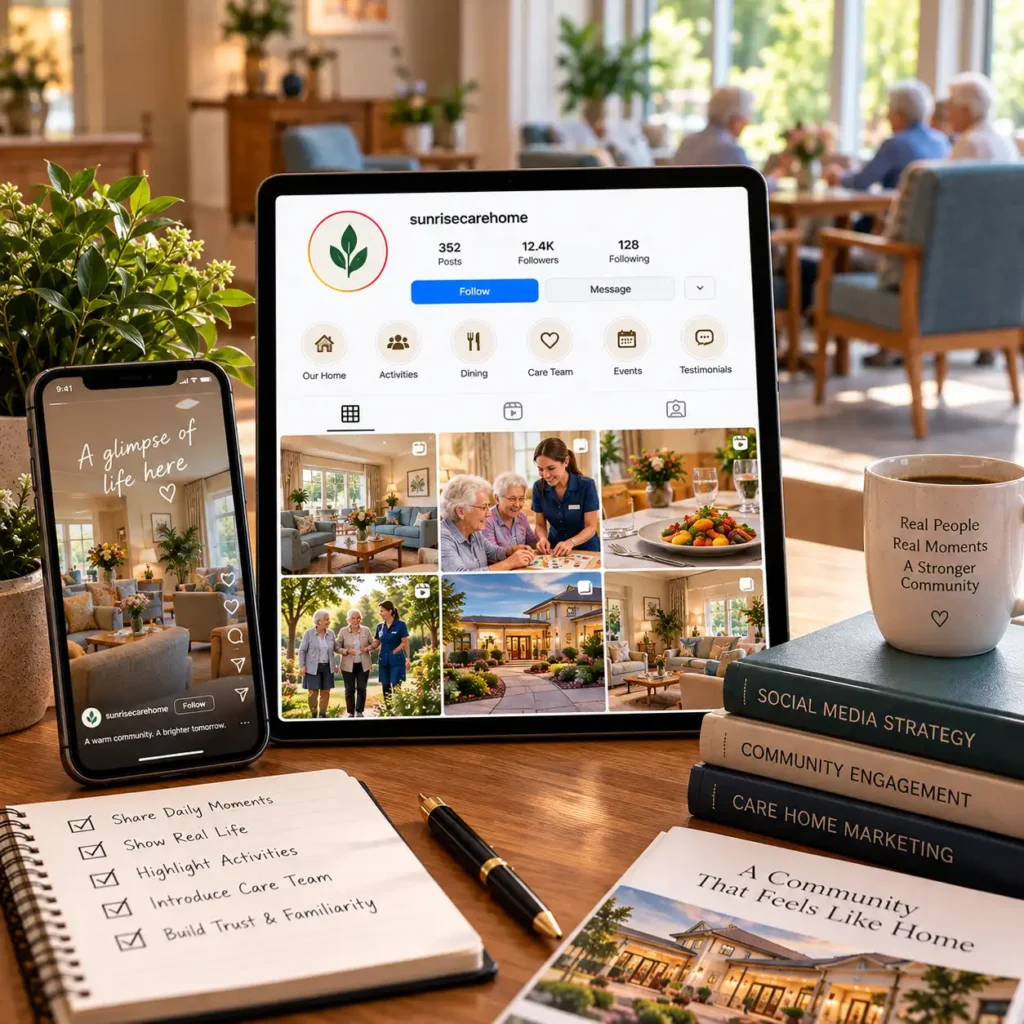
4. Organic Social Media That Builds Familiarity
Here is an honest take on organic social. It will not fill your beds directly. Almost nobody reads a Facebook post and books a tour that afternoon.
What it does is answer the question every family asks silently. What does a Tuesday actually look like in there? Your activity calendar, your staff, your dining room at lunch. Post those and drop doubt before the tour starts.
The compounding effect is the real payoff for assisted living marketing. A family finds you through Google Ads. Then they check your Facebook page. If the last post is from 2023, they conclude. It is not a good one.
Post types that work:
- Resident milestones and birthdays, always with written consent
- Staff introductions with names and years of service
- Short clips from activities, meals, and outings
- Plain answers to the questions families ask on tours
- Local events your community shows up for
Consent is not paperwork here. Every resident photo needs written permission on file before it goes up. Families notice when a community handles this well.
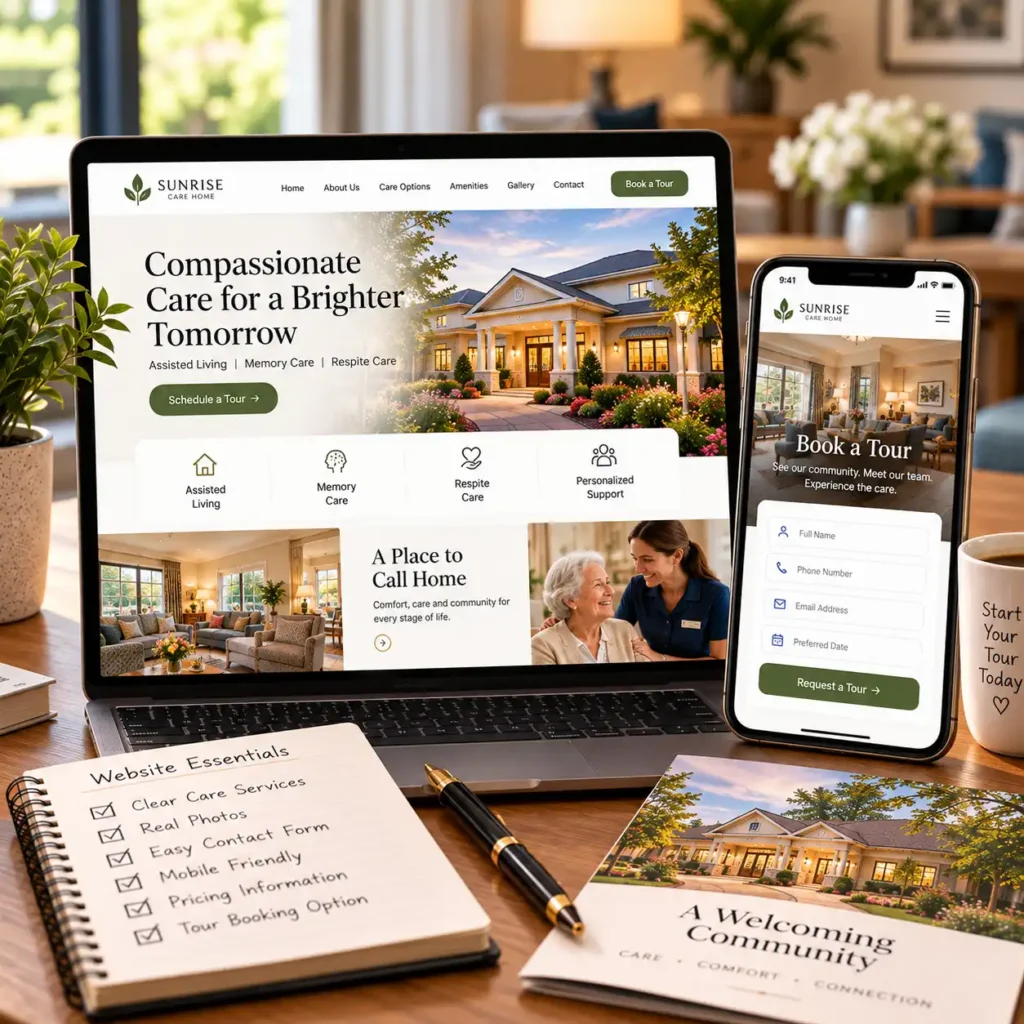
5. A Website That Turns Visitors Into Tour Requests
Every channel above ends on your website. So a weak site wastes all five of them.
Three things break these sites again and again. Pricing hidden behind a phone call. A contact form buried at the bottom of the page. Photos that clearly belong to some other building. Families catch all three.
Picture the moment. A daughter opens your site at 11 pm on her phone, half asleep. She wants three answers fast. Is it close enough? Can we afford it? What does it look like inside? Thirty seconds is the window. Miss it, and she goes back to Google and clicks the next result.
Run this checklist:
- A tappable phone number at the top of every page
- A starting price range, even a wide one
- Real photos and a video tour of your actual building
- A tour form with four fields, not twelve
- Pages that load in under three seconds on mobile data
One more note on your care home website. Visitors skew older, and many run larger text settings on their phones. Small gray type on white is not a design preference here. It costs you inquiries every week.
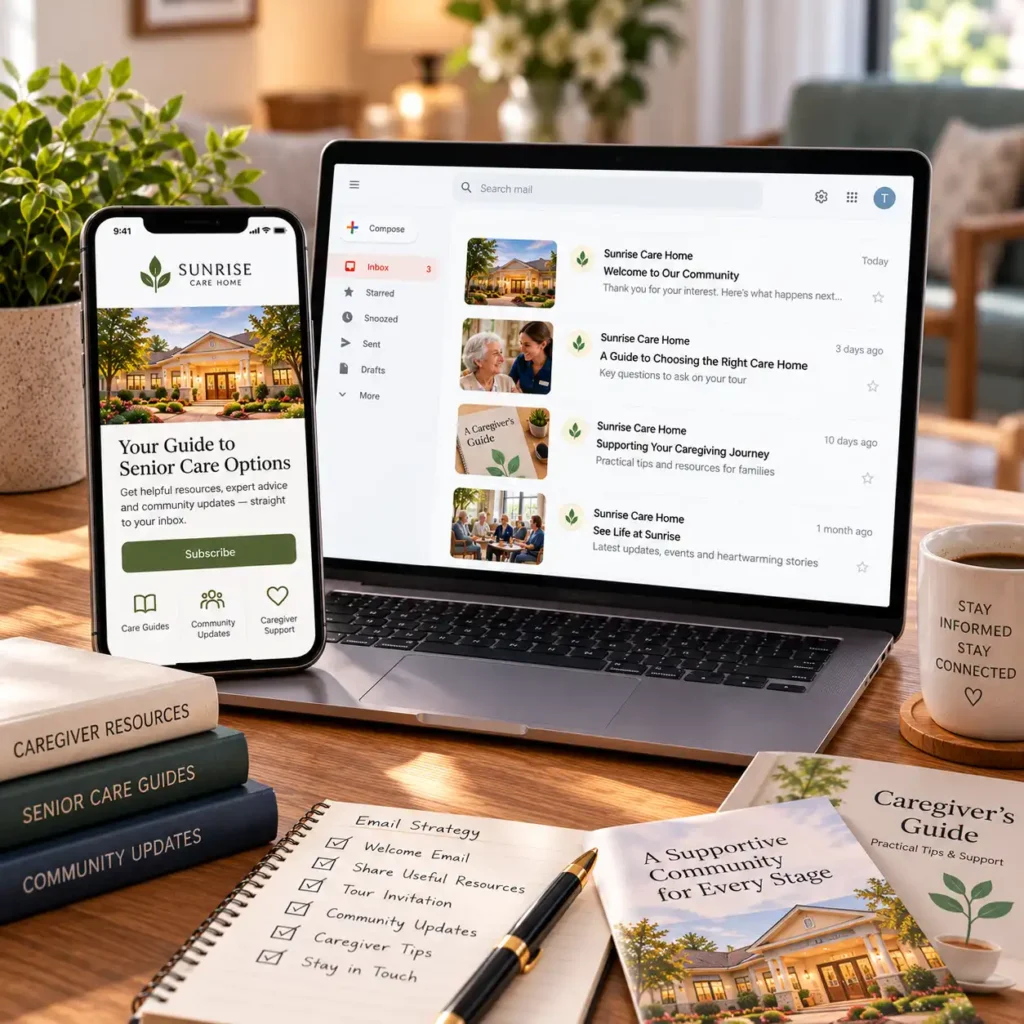
6. Email Marketing That Stays in the Conversation
Most families are not ready when they first call you. They are planning for a parent who still drives to church. The real decision lands six months later, after a fall or a diagnosis. Whoever stayed in touch gets that move-in.
Two calls and a mailed brochure is not follow-up. Send things people actually need instead. How to start the conversation with a parent who refuses help. What to ask on a tour. How to compare two communities on cost without building a spreadsheet.
Build this sequence first:
- A same-day confirmation with your tour link and a real person to reply to
- A community comparison guide on day three
- A caregiver stress resource around day ten
- A short monthly check-in that stays useful, not salesy
Deliverability beats volume with senior care leads. Clean your list every quarter. Keep a one-click unsubscribe in every send. A bought list will burn your domain inside a month.
Which Strategy Should You Start With?
Start with the problem you actually have. Empty beds and a budget? Run Google Ads and fix the website in the same month. Paid search buys you inquiries while the slow channels build underneath.
Have runway and want to stop renting attention? Begin with local SEO and your Google Business Profile. Six months is a long wait. But those inquiries keep arriving after you stop paying. No ad account does that.
Third case, and it is the common one. Your inquiries are fine, and your conversion is not. More traffic will not help you. Fix the website and the email follow-up first. Most operators asking about lead generation for care homes do not have a lead problem. They have a follow-up problem. Check your response times before spending another dollar.
Mistakes That Quietly Drain Your Inquiry Flow
None of these look like failures. They look like a normal Tuesday. That is why they run for years without anyone catching them. Most care home marketing problems are slow leaks, not blowouts.
- Leaning on one referral source. It works until the discharge planner changes jobs.
- Letting weekend inquiries sit. Families compare three communities on Saturday and decide by Monday.
- Marketing to residents, not adult children. Your buyer is the daughter, not the 84-year-old.
- Sending ads to your homepage. A memory care searcher should land on a memory care page.
- Tracking traffic instead of tours. Sessions do not fill beds. Tours do.
The Numbers That Tell You It’s Working
Website traffic is a vanity number in this industry. A 40 percent jump in sessions means nothing if tours stayed flat. Count the things that move care home occupancy instead.
Watch the conversion between steps, not just the totals. Inquiries to tours tell you whether admissions responds fast enough. Tours to move-ins tells you whether the building sells itself.
- Inquiries per month, split by source
- Cost per inquiry for each paid channel
- Inquiry to tour booking rate
- Tour to move-in rate
- Average days from first contact to move-in
Then there is the attribution trap. A lead from March often moves in during September. Monthly reports will lie to you unless you track by cohort. Ask your team to pull it quarterly instead.
Let Codestro Build Your Care Home Lead Engine
Look at what most communities lean on today. Referral agencies taking a cut of every placement. Directory listings billing per lead. A hospital relationship that depends on one discharge planner staying put. Ad accounts that go silent the day a card declines.
All of it is rented. None of it compounds. Codestro builds the version you own instead: a digital marketing team that understands senior care and the families behind every inquiry.
- Local SEO and Google Business Profile work that lands you in the map pack
- Google Ads built around care type and radius, not guesswork
- Facebook Ads that reach adult children before the crisis hits
- Social content showing families what daily life looks like
- Website design that turns late-night phone visitors into tour requests
- Email sequences that keep you in the conversation for months
Ready to fill those beds without renting every lead?
Book a free strategy call on Codestro’s Calendly, or reach out directly at info@codestro.com.
Key Takeaways
Six channels, two speeds, one destination. Paid channels buy you time. Organic channels buy you independence. Your website and your email decide whether either one pays off.
- SEO: slow, cheap, keeps working after you stop paying
- Google Ads: fast, costly, stops the day you pause it
- Facebook Ads: reaches families months before they search
- Organic social: builds trust, rarely books tours alone
- Website: converts every other channel or wastes it
- Email: catches the families who were not ready yet
Run two channels well before adding a third. That is how you increase care home occupancy without burning budget. Patience beats spend in lead generation for care homes.
Frequently Asked Questions
Google Ads can bring calls in the first week. Facebook Ads need two to four weeks to find their audience. Local SEO takes three to six months to move. Email works from day one, but only on leads you already have. Plan for a mixed timeline.
Most single communities land between 1 and 3 percent of annual revenue. A 60-bed building often runs $3,000 to $8,000 a month across ads, content, and website work. Spend less, and you compete on luck. Track cost per move-in, not cost per click.
Google Ads for beds you need filled this quarter. Facebook Ads for the pipeline six months out. Search catches families already looking. Social reaches the ones still hoping Dad manages alone. Run both once your care home marketing budget allows it.
Most do, at least at first. Referral agencies fill beds fast, but they take a large share of the first month or more. Treat them as a bridge, not a foundation. As your own channels mature, your cost per move-in drops.
Plan on 10 to 15 qualified inquiries per move-in. Roughly a third become tours, and a third of those sign. Weak follow-up pushes that past 20. Strong assisted living marketing improves the ratio, not just the volume.