Lead Generation for Travel Agents
Lead Generation for Travel Agents: 8 Proven Ways to Get Clients
Lead generation for travel agents has gotten harder, not easier. OTAs show up first on every search. Old-school lead programs cost more each year and dry up the moment you stop paying for them. That’s the real problem most agents are facing right now. This guide covers 8 channels, paid and organic, that still bring in qualified travel leads without draining a budget in the process. Start with the one that costs the least and compounds the most.
1. SEO for Tour Operators: The Channel That Keeps Working After You Stop Paying
Search traffic converts differently from social traffic. Someone typing “best Peru trekking tour operator” has already decided to go. They just need to decide who to book with. That’s a different mindset than someone scrolling Instagram between meetings. SEO plays into that intent directly, and it’s one of the few forms of lead generation for travel agents that keep working after you stop actively pushing it.
Three things matter most here. Destination and itinerary pages should answer the exact questions a traveler is Googling, not just describe the trip in marketing language. A Google Business Profile filled out completely helps for local searches like “tour operator near me.” And blog content built around real trip-planning questions, best time to visit, packing lists, permit requirements, tends to pull in travel leads long after it’s published.
A few places to focus SEO effort first:
- Destination and itinerary pages optimized for specific search terms
- Google Business Profile, kept current with photos and reviews
- Blog content answering real planning questions
- Backlinks from travel directories and partner sites
2. Facebook Ads for Travel: Turning Scroll-Stopping Photos Into Inquiries
Travel sells on visuals. Full stop. Facebook and Instagram, since they run on the same ad system, still work well for this because the format rewards a good photo over a clever headline. A single striking shot of a coastline or a mountain trail does more work than three paragraphs of copy.
Targeting is where this channel earns its budget. Instead of guessing at a broad “travel lovers” audience, layer it. Age range, past engagement with international travel content, and household income bracket together will get you a tighter, more responsive audience than any single filter alone. Retargeting matters even more. Someone who visited your site last week and didn’t inquire is a warmer lead than almost anyone in a cold audience, and a lead-form ad that skips the landing page step can catch them before they forget you exist.
Worth testing on a small budget first:
- Lookalike audiences built from past bookers
- Retargeting site visitors who didn’t convert
- Lead-form ads for lower-friction inquiries
3. Google Ads for Tour Operators: Catching Travelers Right Before They Book
Intent beats reach. That’s the core difference between this channel and social ads. Someone running a search for “Peru trekking tour operator” isn’t browsing; they’re comparing options right before booking, and another proven method of lead generation for travel agents relies on catching exactly that moment.
Budget size gets too much credit here. What actually moves the needle is how tightly the keyword, the ad copy, and the landing page match each other. A generic homepage sending traffic from a specific search term wastes most of the clicks. Two things most tour operators skip and shouldn’t: retargeting past site visitors with a dedicated campaign, and setting up conversion tracking properly before spending a dollar. Without tracking, there’s no way to know which keywords for travel agents’ lead generation are actually paying off and which ones are just burning spend.
Search campaigns, Performance Max, and local campaigns each play a different role, and running all three without knowing which is doing the work is a common, expensive mistake.
4. Adventure Tour Operator Google Ads: Why Generic Travel Keywords Don’t Work Here
Adventure operators need a different playbook. Generic keywords like “travel packages” pull in browsers who aren’t looking for a six-day trek or a diving trip. They’re too broad to convert well for this niche. Long-tail terms built around the activity and the destination together, “Kilimanjaro summit trek operator” instead of just “Africa tours,” bring in searchers who already know what they want.
Video matters more here than in general travel PPC. A 15-second clip of the actual trail, the actual dive site, or the actual climb tells a searcher more in three seconds than any headline can. Seasonal bid adjustments also pay off, since most adventure trips book 4 to 8 months ahead of the actual departure date, and bidding flat all year wastes budget outside that window.
- Long-tail, activity-plus-destination keywords over generic travel terms
- Video ad extensions showing real footage, not stock photography
- Bid adjustments tied to typical booking lead time
5. Social Media for Travel: Building Trust Long Before Someone Books
Not every channel needs to convert on the spot. Organic social does a different job from paid ads. It builds trust and stays visible in someone’s feed for weeks or months before they’re actually ready to book, which is exactly why treating it like a direct-response channel usually disappoints.
Instagram still leads for destination inspiration through strong visuals. TikTok works well for short, fast itinerary breakdowns, “3 days in Lisbon” style content that gets watched to the end. Facebook Groups quietly do more for trust than either, since a group built around a specific destination or trip type turns casual followers into an actual community that asks questions and shares their own trip photos. User-generated content, real client photos, and honest reviews consistently outperform polished promotional posts. People trust other travelers more than they trust an agency’s own copy.
6. Should You Hire a Travel PPC Agency? What Changes When You Do
Sooner or later, most agents hit the same question. Run these campaigns in-house, or hand them to someone who does this full-time? There isn’t a universal right answer, but there’s a real tradeoff worth being honest about.
A travel-focused PPC partner understands things a generalist agency usually doesn’t: booking seasonality by destination, keyword costs that swing wildly by region, and the ad policy restrictions specific to travel that can get a campaign paused without warning. That expertise costs money, and it costs time to find the right partner in the first place. But if managing lead generation for travel agents in-house means campaigns get set up once and never touched again, that’s often more expensive in the long run than paying someone to manage it properly. The honest answer usually comes down to how much time an agent actually has to spend testing and adjusting campaigns each week, not just whether the budget allows for outside help.
7. GEO for Travel Websites: Getting Cited by AI, Not Just Ranked by Google
GEO stands for Generative Engine Optimization, and it’s newer than most agents realize. It means optimizing content so AI tools like ChatGPT, Perplexity, and Google’s AI Overviews actually cite your site when someone asks a travel-planning question, instead of sending that answer to a competitor.
Why does this matter now? More travelers are asking an AI assistant “what’s the best time to visit Costa Rica” instead of typing that same question into a search bar. If your content answers it clearly and factually, there’s a real chance an AI tool surfaces your site as the source. That means clear, direct answers near the top of a page, proper schema markup, and content that reads as genuinely useful rather than stuffed with keywords. Traditional SEO gets you ranked. GEO gets you quoted.
- Clear, factual answers placed early in the content
- Structured data and schema markup
- Specific, accurate information over generic filler
8. Travel Agency Website Design: The One Asset Every Other Channel Depends On
None of the previous seven channels matter if the site they point to doesn’t hold up. That’s the uncomfortable truth most guides on lead generation for travel agents skip entirely.
Mobile matters most. Most travel research happens on a phone, often during a commute or a lunch break, so a site that loads slowly or looks broken on mobile loses the lead before it even reaches the inquiry form. Speed is the second piece, since a page that takes more than a few seconds to load bleeds visitors before they see a word of copy. The inquiry form itself should ask for the minimum needed to follow up, not fifteen fields that feel like a job application. And trust signals, real client photos, honest reviews, past trip results, do more to move someone from browsing to inquiring than another paragraph about the agency’s mission.
- Mobile-first, fast-loading design
- Short inquiry forms, 4 to 5 fields at most
- Testimonials and past-client photos for trust
Every channel above sends traffic here. Get this part right before scaling ad spend on any of the other seven.
Let Codestro Build Your Lead Generation for Travel Agents
Most travel agents are running some mix of paid ads, referrals, or a third-party leads program right now. All three share the same weakness. They stop producing the moment the budget stops or the referrals slow down.
If you’re looking for a travel agency lead generation company, it’s worth working with a team that combines long-term organic growth with paid marketing instead of relying on just one channel.
Codestro builds the version that doesn’t stop. That means the organic side, SEO, content, and GEO, working alongside the paid channels instead of replacing them, so results keep compounding even during months when ad spend gets tight. Here’s what that actually looks like as deliverables:
- SEO strategy built around destination and itinerary pages
- Facebook and Instagram ad management with retargeting built in
- Google Ads campaigns for general and adventure-niche tour operators
- Organic social content across Instagram, TikTok, and Facebook Groups
- GEO optimization so AI tools cite your site directly
- Website design audits focused on mobile speed and conversion
Ready to stop losing leads the moment ad spend pauses?
Book a free strategy call with Codestro →
Or reach us at info@codestro.com
Key Takeaways
Paid channels move fast. Facebook Ads, Google Ads, advanced PPC, and a dedicated PPC agency all bring in leads quickly, but only while the spend continues. Organic channels take longer to build but keep working long after the initial effort. SEO, GEO, social content, and a website built to convert all compound over time instead of resetting to zero each month.
The agents seeing the strongest results right now aren’t picking one side. They’re running paid and organic lead generation for travel agents at the same time, using paid campaigns to fill the gap while the organic side builds momentum in the background.
- SEO for tour operators
- Facebook Ads for travel
- Google Ads for tour operators
- Adventure tour operator Google Ads
- Social media for travel
- Travel PPC agency support
- GEO for travel websites
- Travel agency website design

SEO for Tour Operators: 10 Proven Tips for More Bookings
Here are 10 tips that are actually being used by the operators that are winning this space.
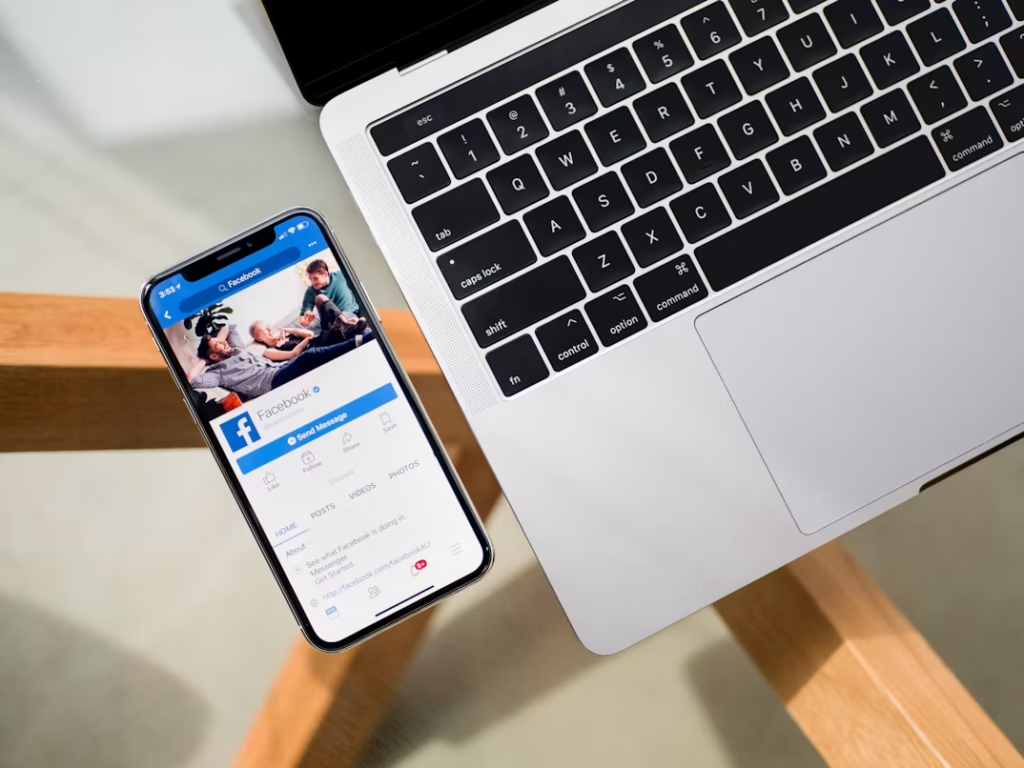
Facebook Ads for Travel: 10 Tips to Get More Leads
This guide walks through 10 tips that turn Facebook spend into real inquiries. Not likes. No comments. Leads you can actually call.

Google Ads for Tour Operators: 10 Strategies for More Bookings
Google Ads for tour operators earns its keep by targeting people who’ve already decided to book, not people who might someday travel.

Adventure Tour Operator Google Ads: 9 PPC Tips That Work
These 9 tips reflect that. They come from real account structures used with adventure tour companies, not textbook PPC theory dressed up for a travel niche.
Social Media for Travel: 10 Strategies to Grow Faster
The businesses growing right now treat social media as a system, not a mood. This guide breaks down 10 strategies that build that system, one piece at a time.

Travel PPC Agency: 8 Things to Check Before Hiring
A ppc agency for travel that skips any of these usually ends up costing more than it saves. Here are eight things worth checking before you sign anything.
GEO for Travel Websites: 10 Tips to Rank in AI Search
Here are 10 tips that get travel sites showing up inside AI answers, not just search results.

Travel Agency Website Design: 10 Features That Boost Bookings
Here are the 10 features doing the actual work on travel agency websites that convert.
Frequently Asked Questions
SEO, social content, and paid ads all bring in inbound interest without a single cold call. Most agents combine two or three of these rather than relying on outreach alone.
Neither wins outright. Paid ads bring faster travel leads, but stop the moment spending stops. SEO takes longer to build but keeps producing results without ongoing cost.
This varies by channel and niche, but a well-optimized site paired with targeted ads typically converts noticeably better than a generic, unoptimized page.
Facebook Ads with tight targeting usually cost less upfront than Google Ads and start producing inquiries within days. Pair it with a short, mobile-friendly inquiry form so the leads don’t drop off before they convert.
Yes. Social builds trust, but the website is where an inquiry actually happens. Without a fast, mobile-ready site behind it, most of that social traffic never turns into a real lead.
Most agents see early movement around 3 to 4 months, with stronger, steadier travel leads by month 6. It’s slower than paid ads at the start, but it keeps producing without ongoing ad spend once it’s ranking.