Interior Designers Lead Generation
Interior Designers Lead Generation: 6 Proven Methods
The key to interior designers’ lead generation is choosing sources that continue to produce leads beyond the completion of the project. The majority of design businesses rely on referrals, and referrals can’t be counted on to make themselves. Referrals are out of the control of most design businesses, and they’re not going to make themselves. A satisfied customer shares his experience with a friend, perhaps two, and then drops the subject for months. That is where a real strategy makes its place.
The top 6 lead generation strategies for interior designers are discussed in this guide: search engine optimization, Google Ads, Facebook Ads, social media marketing, website design and development, and PPC ads. They all have different purposes. Together, they create a pipeline that does not become choked in between projects.
Why Lead Generation Matters for Interior Designers
Most interior design businesses run on referrals, and referrals follow no schedule. A client refers to a friend, then nothing for three months. That’s fine when the pipeline is already full. It’s a problem when a project ends, and nothing else is lined up behind it. Lead generation for interior design closes that gap by putting new inquiries under your control instead of leaving them to chance. It doesn’t replace referrals. It runs alongside them and fills the space in between.
Here’s what a working lead generation strategy actually delivers:
- A steadier flow of projects, not just busy seasons and dry spells
- Clients who already know your style before the first call
- A clearer edge over designers who depend on word of mouth alone
- Faster-closing inquiries that negotiate less on price
- A pipeline that keeps moving even in a slow month
6 Proven Methods to Generate Leads for Interior Designers
These six methods cover organic search, paid search, paid social, organic social, your website, and pay-per-click advertising as a broader category. None of them work forever in isolation. SEO takes months to build momentum, so pairing it with Google Ads or Facebook Ads keeps leads coming in while the organic side catches up. Read through all six before deciding where to start.
1. Search Engine Optimization (SEO)
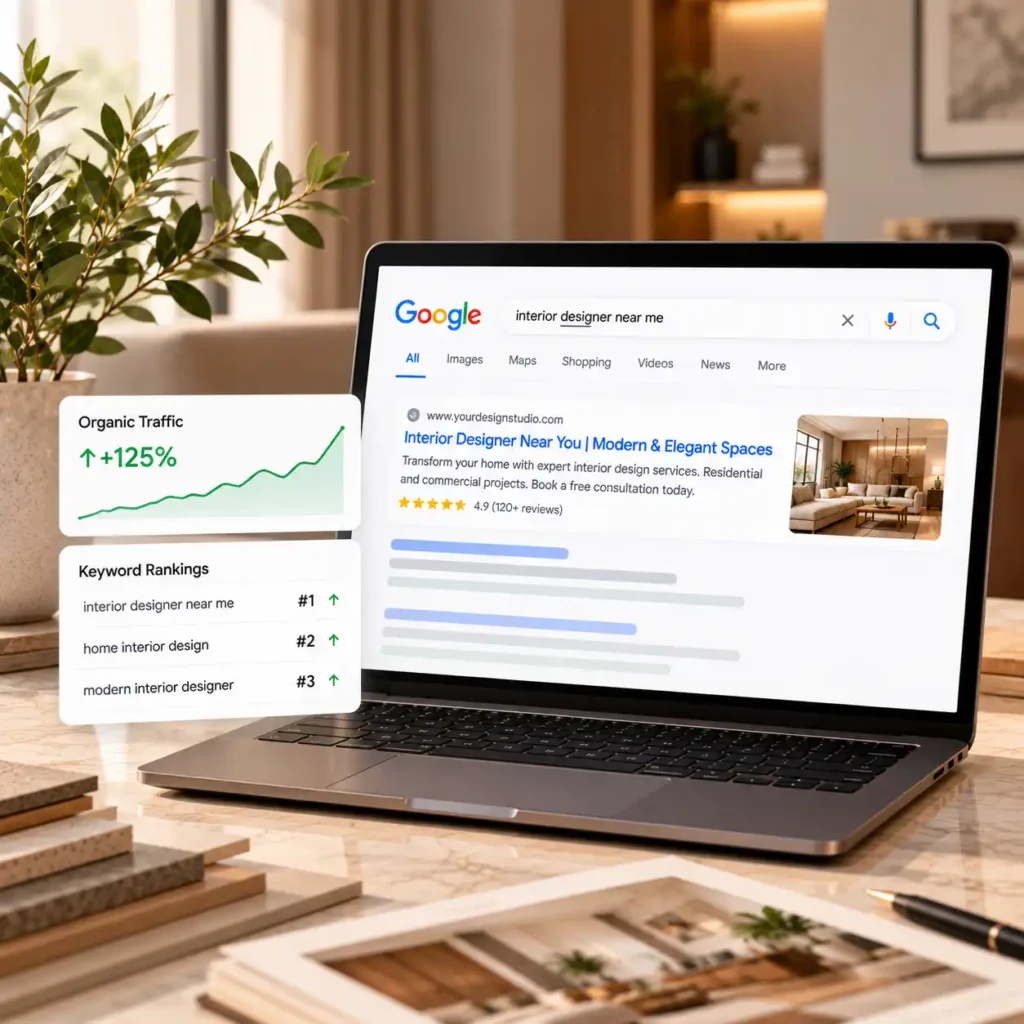
Search engine optimization gets interior designers found by people who are already looking. Most homeowners research a designer online weeks before they call. Rank well for local searches, and your name shows up right when someone’s ready to reach out.
Local SEO matters more than broad rankings for this industry. Claim and fill out your Google Business Profile completely, with real project photos and an accurate service area. Use phrases like “interior designer in [city]” naturally across your site, not just on the homepage. Reviews carry real weight here too. A steady stream of them signals to Google, and to potential clients, that people trust the work.
SEO is the slowest method on this list, and that’s worth knowing going in. Lead generation for interior design through organic search usually takes six to twelve months to produce steady traffic. Once it ranks, though, it keeps working without a daily ad spend behind it.
- Location-based keywords in page titles and headers
- Fast-loading, mobile-friendly pages
- Backlinks from design blogs and local directories
- A blog that answers real client questions
- A complete, review-rich Google Business Profile
2. Google Ads
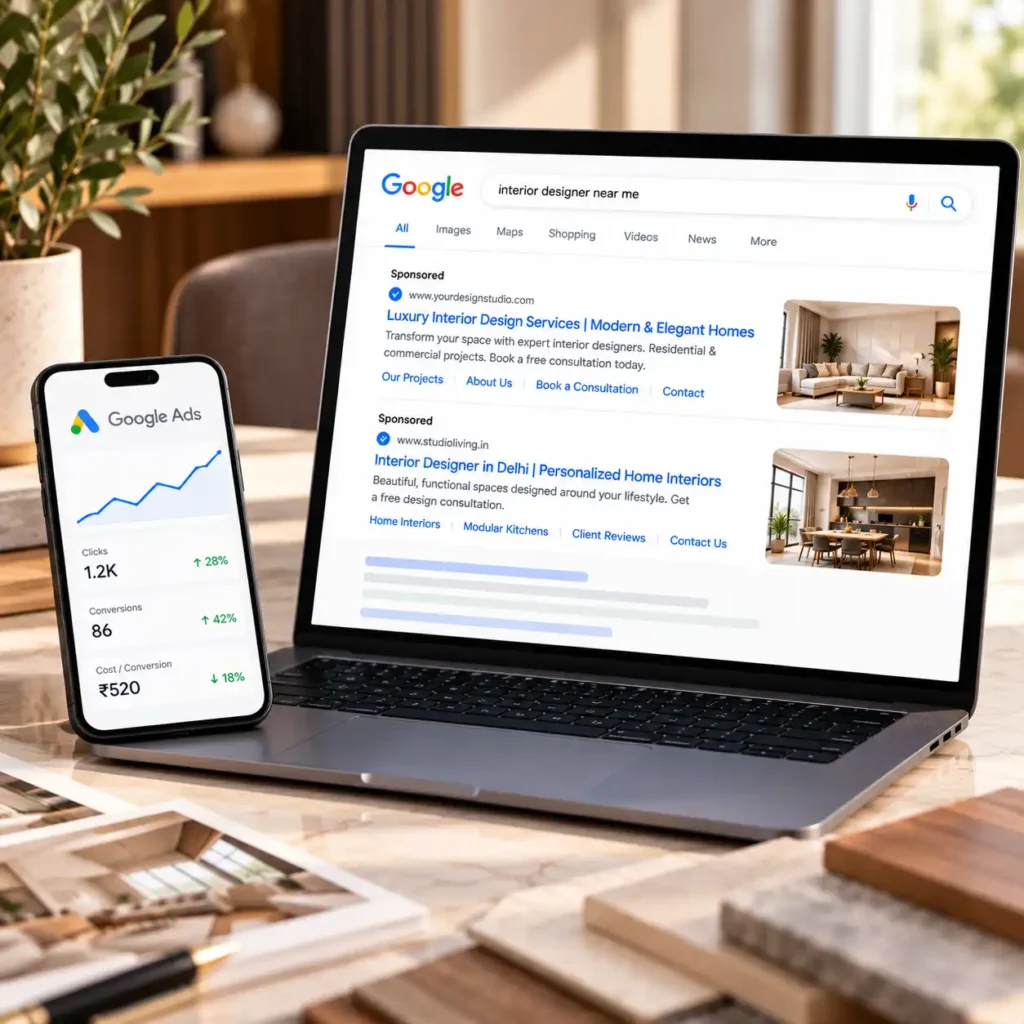
Google Ads puts a designer in front of people the moment they search, without waiting on rankings to climb. Bid on terms like “interior designer near me” or “kitchen remodel design,” and the ad appears above the organic results. That speed is the appeal. SEO takes months to build. Google Ads can start sending inquiries the same week a campaign goes live.
The catch is where those clicks land. Sending paid traffic to a generic homepage wastes the budget fast. A dedicated landing page built around one clear offer, like a free consultation, converts far better than a page trying to cover everything the firm does. Build that page first, then scale the budget once it proves it converts.
- Set a location radius that matches where you actually take projects
- Cap the daily budget so spend stays predictable
- Schedule ads for the hours people are actually browsing
- Layer in demographic targeting to filter out poor-fit clicks
3. Facebook Ads
Facebook Ads work differently from Google Ads. They reach people who aren’t actively searching yet but respond fast to a strong before-and-after photo. A scroll-stopping renovation reveal does more work here than any headline could. This is discovery advertising, not intent-based advertising, and the creative has to carry that weight.
Retargeting is where Facebook earns its budget back. Someone visits the website, doesn’t inquire, then sees an ad featuring the exact project style they were browsing. That second touch closes a real share of leads that would otherwise disappear. Pair retargeting with fresh audience prospecting so the funnel doesn’t run dry.
- Carousel ads showing full project transformations
- Lookalike audiences built from past clients
- Interest-based targeting around home renovation and luxury decor
- Retargeting campaigns aimed at recent website visitors
4. Social Media Marketing
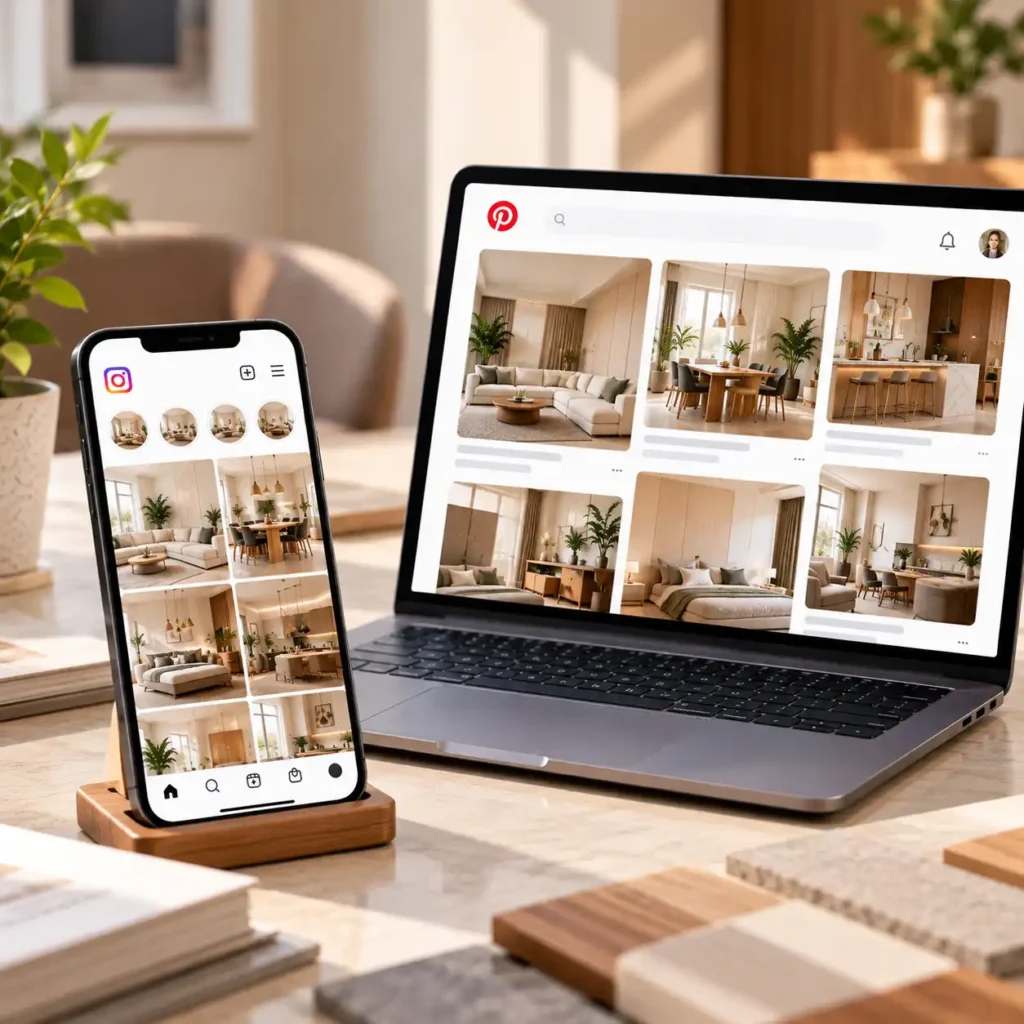
Organic social is a different discipline from paid ads, even on the same platforms. This is the ongoing habit of posting to Instagram and Pinterest to build an audience and show off range over time, not a single campaign with a budget attached. Visual platforms convert well here because the product itself is visual. A well-lit finished room does more selling than a paragraph of copy ever could.
Consistency beats frequency in practice. Posting three times a week for a year outperforms a daily burst that fizzles out after a month. Leads for interior designers tend to come from accounts that show up reliably, not the ones that post in bursts and go quiet.
- Before-and-after project reveals
- Short-form video walkthroughs of a finished room
- Design tip carousels that answer common client questions
- Client testimonials shared as posts or stories
- Behind-the-scenes content from an active project
5. Website Design/Development
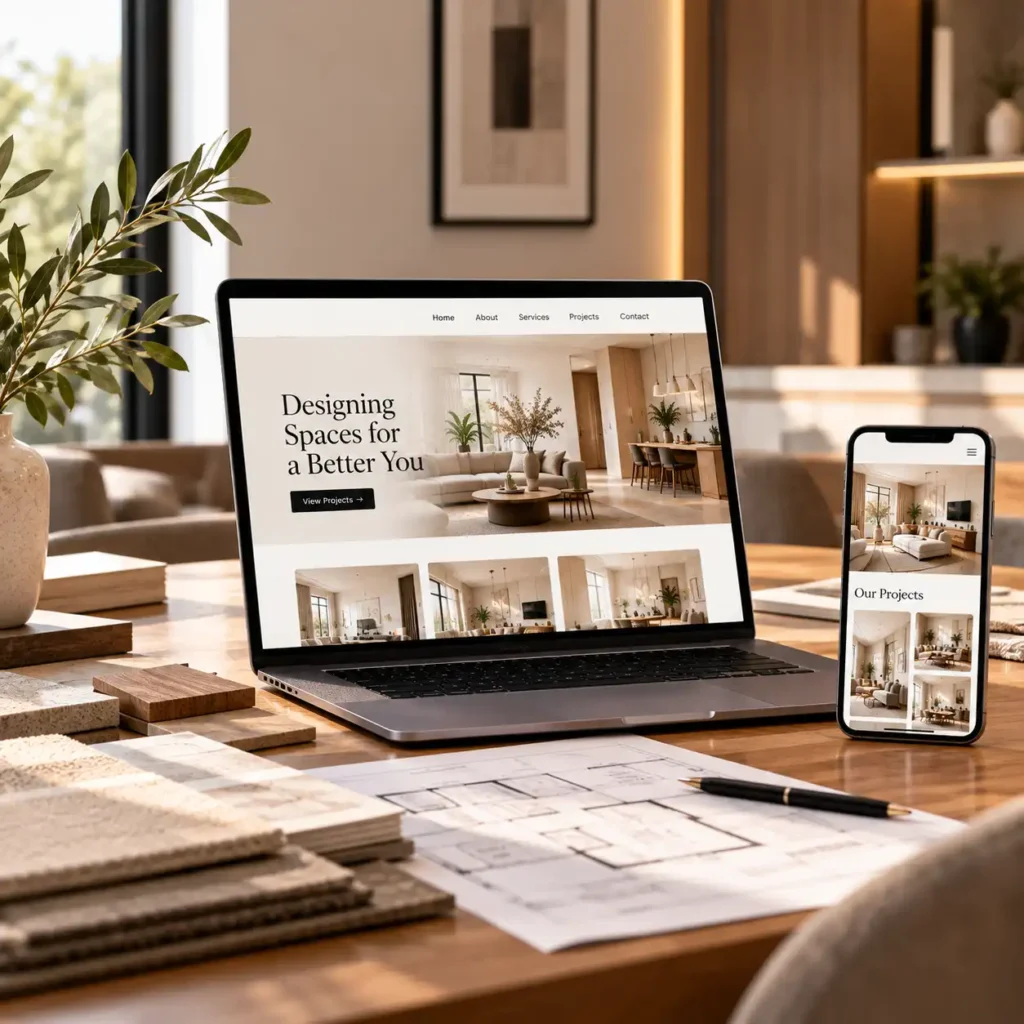
Every other method on this list sends traffic to one place, the website, and a weak site undercuts all of it at once. Load speed and mobile responsiveness aren’t optional details here. A portfolio that’s slow to load or hard to browse on a phone loses visitors before they see a single project.
A clear call to action needs to sit above the fold and repeat down the page, something as direct as “Request a Consultation.” Don’t bury it in a footer menu. The visitor should never have to hunt for the next step once they’ve decided your work fits what they want.
- A contact form or booking widget that’s easy to find
- Project case studies with real photos and context
- Client testimonials placed near the portfolio
- Clear, specific service pages instead of one vague “services” tab
- Fast load times on both desktop and mobile
6. PPC Ads
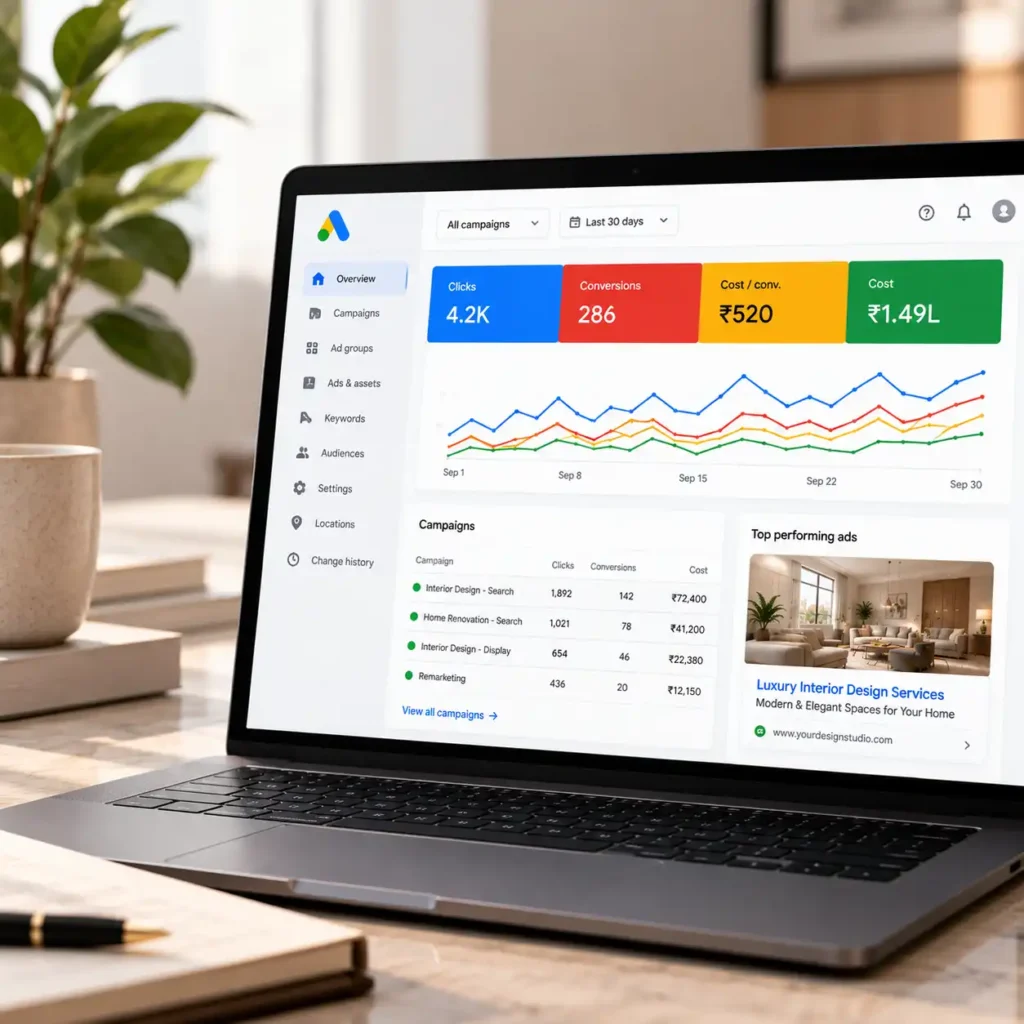
Pay-per-click ties Google Ads and Facebook Ads together under one model: paying only when someone clicks, not for every impression. That structure keeps risk low, since a small test budget shows whether a channel works before committing serious spend to it. Test small, watch the numbers, then scale what actually converts.
Landing page relevance affects more than conversion rate. It affects cost per click too. Platforms reward ads that match their landing page closely with a better quality score, which lowers the price per click over time. Ignore that connection, and the same campaign ends up costing more for worse results.
- Match ad copy to landing page content exactly
- Test multiple ad variations at once, not one at a time
- Set a realistic monthly budget before launch, not after
- Track cost per lead, not just clicks
How to Measure the Success of Your Lead Generation Efforts
Running all six methods without tracking results is a guessing game with a budget attached. A simple monthly check-in on a small set of numbers beats an overwhelming dashboard nobody actually opens. Pick a few metrics, check them on a schedule, and adjust based on what they show.
- Where website traffic is actually coming from
- Conversion rate on the contact form itself
- Cost per lead on every paid channel
- How many consultations turn into signed clients
Let Codestro Build Your Interior Design Lead Pipeline
Most designers end up juggling SEO, Google Ads, Facebook Ads, social posting, their website, and PPC alone, and each one needs steady attention or it stalls. That’s a lot to run well on top of managing actual client projects. Something usually slips, and it’s often the channel that would’ve brought in next month’s leads.
Codestro runs all six as one connected system instead of six separate efforts pulling in different directions. That means:
- Ranking your site locally through ongoing SEO
- Running Google and Facebook ad campaigns built to convert, not just get clicks
- Managing a consistent social media presence across Instagram and Pinterest
- Building a website designed around inquiries, not just a portfolio
- Setting up PPC campaigns with landing pages that match the ad
Ready to stop juggling six channels and start filling your pipeline?
Book a free strategy call with Codestro →
Or reach us at info@codestro.com
Key Takeaways
Interior designers’ lead generation works best when a few of these six methods run together instead of one in isolation.
- SEO builds slow, compounding traffic that keeps working without daily ad spend
- Google Ads reaches people the moment they’re actively searching
- Facebook Ads reaches people before they know they’re looking
- Social media marketing builds an audience and shows off range over time
- A strong website turns traffic from every other channel into actual inquiries
- PPC ties paid channels together under one low-risk, pay-per-click model

Locksmith SEO: 7 Strategies to Get More Calls
Seven specific moves, done in order, account for almost every gain a locksmith business can make in search. Sound like a lot to track? It’s just seven steps, tackled one at a time.

Locksmith Ads: 8 Strategies to Get More Calls Fast
This guide breaks down eight locksmith advertising strategies, all online, ranked loosely by how fast each one tends to put a call on the board. Some get the phone ringing today. Others build the kind of recognition that pays off next month. Both matter, and knowing which is which changes how you spend.
Google Ads for Locksmiths: 8 Strategies That Work
locksmith Google Ads searches are almost always urgency-driven- someone locked out of a car or a house right now, which changes how the whole account should be built. Here are 8 Google Ads Strategies That Works.

Locksmith PPC: Reduce Ad Costs and Get More Calls
This guide explains what that management actually means, how it can make costs creep up, and when it’s time to call in professional assistance.

Locksmith Website Design: 7 Features to Get More Calls
This article breaks down seven of them, each one aimed at turning a browsing visitor into a paying customer.

Local SEO for Locksmiths: 10 Strategies to Dominate Google
Let’s take a look at 10 ways to propel a locksmith company into that number one position, in order of most likely to get results quickly.

Locksmith Social Media: 10 Strategies That Work
This guide breaks down ten specific moves that work for locksmiths right now. Not generic marketing theory borrowed from retail brands.
Frequently Asked Questions
The standard rule of thumb is five to 10 percent of annual revenues, depending on growth targets. A newer company looking for more growth will tend to be more aggressive on the higher end of that scale.
Within the first week, you can start to get inquiries from paid ads, both Google and Facebook. It’s a long-term approach, typically 6-12 months, and continues to provide value without continued investment.
For the majority of solo designers or small companies, it is more feasible to begin with 2-3. Put in the rest when there is bandwidth and budget available, but don’t start them all at once.
Leads for interior designers can be generated within days of channel launch via paid channels. Organic strategies such as SEO and social media marketing can take longer to take off, typically after 3-6 months of continued activity.