
Local SEO for Architects
More leads. More rankings. More revenue. Built specifically for your industry
Get Your Free Consultation Today!
Results Architects Actually can See
Local SEO for Architects: 10 Proven Strategies to Dominate Your City on Google
A developer is planning a commercial build in your city. They open Google and type "architect near me." Three firms appear on the map. Yours isn't one of them.
That project goes to someone else. Not because they're better. Because they showed up and you didn't.
Local SEO for architects is the process of optimizing your online presence for location-based searches. It puts your firm in front of nearby clients at the exact moment they're ready to hire.
Most architecture firms rely on referrals and directories. Both matter. But neither puts you at the top of Google when a high-value client searches your city right now.
In this guide, we cover 10 proven local SEO strategies for architecture firms. Use them to dominate your city on Google and win more of the projects you actually want.
What Is Local SEO for Architects — and Why Does It Matter?
Local SEO is the practice of increasing the visibility of local businesses in Google searches based on their location (ex, "Residential Architect in Chicago" vs "Commercial Architect in My Area").
When a person types into Google for a local architect, there are 2 types of search results returned:
- The Local Pack: a map with 3 firms pinned at the top of the page
- Organic results: standard website listings below the map
Both drive real project inquiries. Here’s why local SEO matters for architecture firms:
- High-intent searches convert fast: The person searching for “architect near me” is very likely to be looking to hire; and therefore, the individual will most likely YIELD a project.
- Competitors are ignoring it: Most of your local competitors have completely ignored Local SEO, thus giving you a competitive advantage.
- It delivers compounding results: Local SEO builds upon itself as time passes; unlike advertising, which will only give you temporary exposure.
- It builds credibility: Getting listed at the top of Google gives you instant ‘authority’ before your client even contacts you.
Remember, every week you do not show up in Local Search results is a week your competitors are winning the project that could have been yours.
Strategy 1: Fully Optimize Your Google Business Profile
Your Google Business Profile (GBP) is the single most important tool for local SEO for architects. It powers the Local Pack — the map results appearing at the top of every local search.
How to optimize your architecture firm's GBP:
- Complete every field: firm name, address, phone, website, hours, and services offered
- Choose the right primary category: use "Architect" first; add secondary categories like "Landscape Architect" or "Interior Designer."
- Write a keyword-rich description: include phrases like "residential architect in [city]" naturally
- Upload project photos consistently: completed builds, design renderings, construction progress shots
- Collect and respond to every review: reviews are a top 3 local ranking factor for Google
- Post weekly updates: share completed projects, awards, or design insights
Pro Tip: Your firm name, address, and phone number on GBP must match your website exactly. Even minor inconsistencies quietly hurt your local rankings every month.
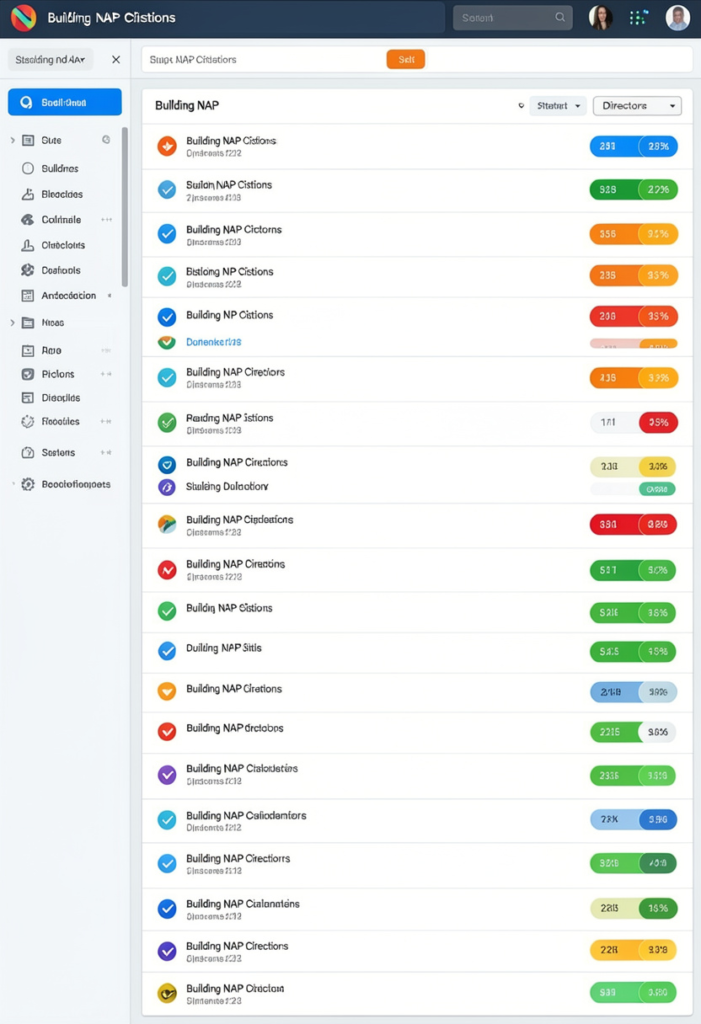
Strategy 2: Build Consistent NAP Citations
NAP stands for Name, Address, and Phone number. Citations are mentions of your NAP across directories and listing sites. Google uses NAP consistency as a trust signal for local rankings.
Key directories every architecture firm must be listed on:
- Google Business Profile, Bing Places, Apple Maps
- Houzz, Architizer, ArchDaily, Dezeen
- Better Business Bureau (BBB)
- Local Chamber of Commerce website
- American Institute of Architects (AIA) member directory
- Yelp, Clutch, and local business directories
Your NAP must be identical across every platform. Use BrightLocal or Moz Local to audit inconsistencies. One outdated phone number across 10 directories silently drags your rankings down every month.
Strategy 3: Earn and Manage Google Reviews Consistently
Reviews are a top 3 local ranking factor. They're also the #1 trust signal for clients comparing architecture firms. A firm with 40 reviews and a 4.9 rating consistently outranks one with 8 reviews. Even with a better website.
How to build a steady review stream:
- Ask at project completion — client satisfaction is highest at handover; that's your best window
- Send a follow-up email — include a direct link to your Google review page; this step doubles review volume
- Make it easy — add your review link to project completion emails, invoices, and your website footer
- Respond to every review — thank positive reviewers by name; address negative ones professionally
- Train your project managers — make review requests a standard part of every project closeout process
Never buy fake reviews. Google's detection is sophisticated. Getting caught means losing your listing entirely.
Strategy 4: Build Dedicated Local Landing Pages
If you serve multiple cities, one homepage won't rank for all of them. Google needs a dedicated page per location. Without it, you're invisible in those areas.
What every local architecture landing page needs:
- City name in the H1, URL, and meta title: e.g., "Architect in Scottsdale, AZ" at /architect-scottsdale-az/
- Unique content written specifically for that location: never duplicate from other city pages
- Local references neighborhoods, developments, or landmarks relevant to that city
- Project photos from that specific city, where possible
- Embedded Google Map showing your office or service coverage
- Click-to-contact button and short inquiry form on every page
At Codestro, we build geo-targeted landing pages for architecture firms that rank and convert from day one.
Strategy 5: Target Local Keywords on Every Page
Generic keywords like "architect" are dominated by national directories. You can't outrank Houzz or ArchDaily on those terms. Your advantage is your location and your specific services. Use both.
Local keyword formulas that win for architects:
- Service + city: "residential architect, Austin, TX."
- Project type + location: "home addition architect near me Dallas."
- Specialty + city: "sustainable architect Phoenix, AZ."
- Commercial + location: "office architect, Chicago, IL."
- Cost-based: "How much does an architect cost in Houston?"
Place each keyword in the page H1, first paragraph, one subheading, meta description, and URL. Use it naturally throughout the page. Never force or repeat it awkwardly.
Strategy 6: Publish Location-Specific Content
A blog isn't just for traffic. For local SEO for architects, it builds topical authority in your city. Google rewards firms that publish consistent, relevant, location-specific content regularly.
Blog content ideas that drive local architecture traffic:
- “How Much Does It Cost to Hire an Architect in [City]? (2026 Guide)”
- “Top 5 Architecture Trends Shaping [City] Homes This Year”
- “Zoning Laws and Building Permits in [City]: What You Need to Know”
- “Best Neighborhoods in [City] for Custom Home Architecture”
- “Commercial Architecture in [City]: What Businesses Need to Know”
Content rules to follow:
- Minimum 1,000 words per service page; 1,200+ for blog posts
- Include your primary keyword in H1, the first paragraph, and one subheading
- Add internal links between related pages on your site
- Publish at least 2 posts per month for compounding growth
Strategy 7: Build Local Backlinks From Your Community
Backlinks from other websites are among Google's strongest ranking signals. For local SEO for architects, locally relevant links matter most.
Practical ways architecture firms earn local backlinks:
- Get featured in local press: a completed building or design award earns editorial coverage and links
- Partner with local contractors and builders: they refer clients and link to trusted architects on their sites
- Sponsor a local design or community event: event websites almost always link back to sponsors
- Join your local AIA chapter: most publish a member directory with live links
- Submit projects to local architecture publications: Houzz and local design blogs link to featured firms
Ten quality, locally relevant links outperform 100 generic directory submissions every time.
Strategy 8: Optimize Your Website for Mobile and Speed
Over 60% of local service searches happen on mobile. A slow or broken mobile site loses clients before they ever see your portfolio.Google uses mobile performance as a direct ranking factor. A beautiful desktop site means nothing if it underperforms on mobile.
Technical requirements for local architect SEO success:
Page load time under 3 seconds — test yours at Google PageSpeed Insights now
Mobile-responsive layout — every page adapts perfectly to any screen size
Click-to-call button on every page — your phone number must be tappable on mobile
Compressed project images — large uncompressed photos are the #1 cause of slow architecture sites
HTTPS security — an SSL certificate is a basic Google ranking requirement
Clean navigation — clear service categories and no broken links anywhere
Strategy 9: Implement Schema Markup for Your Firm
Schema markup is structured code added to your website. It helps Google understand exactly who you are, where you're located, and what services you offer. Most architecture firms never implement it. That's a significant missed opportunity.
Schema types every architecture website should have:
- LocalBusiness Schema: tells Google your firm name, address, phone, hours, and service area
- Service Schema: defines each specific architecture service you offer
- Review Schema: displays your star rating in search results as rich snippets
- FAQ Schema: makes your FAQs eligible for the "People Also Ask" box on Google
Most WordPress SEO plugins handle basic schema without touching code. For custom websites, your developer adds it directly to the HTML.
Strategy 10: Track Your Local SEO Performance Monthly
Local SEO is not a one-time setup. It's an ongoing process. The architecture firms dominating local search review their numbers every month and act on what they find.
What to track and how:
- GBP Insights: profile views, website click-throughs, direction requests, and direct calls from your listing
- Google Search Console: keywords that you rank for, total impressions, and average position
- Google Analytics 4: total organic traffic, the top pages that provide inquiries from clients
- Keyword rankings: Track your top 10-15 local keywords every month with a keyword rank tracker
- New client source: Inquire how each of your new clients found you
Be sure to review these metrics on the 1st day of every month, as well as to take corrective action if you see that your keywords have recently dropped in rankings. Your competitor may have posted new content, or you may need to refresh your GBP to get more visibility. If any of this is true, you need to take immediate action.
Let Codestro Handle Your Local SEO for Architects
Running an architecture firm takes every hour you have. Managing local SEO consistently on top of it is overwhelming. That’s exactly why our clients come to us.
At Codestro, we help architecture firms across the USA rank higher in local search. As a local SEO company for architects in the US, we build customized strategies focused on visibility, qualified project inquiries, and long-term local growth
Here’s what our team handles for architecture clients:
- Google Business Profile setup and ongoing optimization
- Local citation building and NAP consistency audits
- SEO-optimized website with dedicated service and city pages
- Monthly blog content creation targeting local keywords
- Schema markup implementation
- Review strategy and reputation management
- Transparent monthly performance reporting
We don’t do generic packages. Every strategy is custom-built for your firm and your market.
Ready to dominate local search in your city? Book a free local SEO strategy call with Codestro →
Or reach us at info@codestro.com





With increasing digital competition across the United States businesses in Washington DC, now realize that their websites need to accomplish more than just existing. Websites today need to perform, engage,
In the age of digital-first consumption, your website is an extension of your business. Whether you are a startup, small to mid-sized business, or a growing enterprise, your website can
In the fast-paced world of the cyber economy today, your website is more than just an online address — it is your most effective sales tool. Whether you are a
In today's "digital first" economy, having a website is no longer just a "nice-to-have "... it is a must-have for generating sales, establishing credibility, and growing your business! Your website
In a digitized world, your website is more than a digital business card - it is the core of your brand identity, customer engagement, and company growth. For Birmingham businesses,
Choose Your Growth Plan
Local Starter
$499/mo
- 1 City Targeting
- Google Business Profile Optimization
- 5 Citation Listings
- Monthly SEO Report
- Basic Local SEO Setup
Growth
$899/mo
- 1 City Targeting
- Google Business Profile Optimization
- 5 Citation Listings
- Monthly SEO Report
- Basic Local SEO Setup
Domination
$1,499/mo
- 1 City Targeting
- Google Business Profile Optimization
- 5 Citation Listings
- Monthly SEO Report
- Basic Local SEO Setup
Frequently Asked Questions
It’s optimizing your firm’s online presence so Google shows you to nearby clients searching for architects.
Most firms see ranking improvements in 3 to 4 months. Strong results typically come between months 4 and 8.
Yes — completely free to claim and manage. It’s the single most impactful local SEO tool for any architecture firm.
Optimize your GBP fully, keep NAP consistent across all directories, and build real Google reviews steadily.
Yes. Each city needs its own dedicated page with unique content. One “Service Areas” page won’t rank locally.