
Carpenter Lead Generation
6 Lead Generation Strategies to Book More Carpentry Jobs
Lead generation for carpenters works best when a few channels run together instead of one at a time. SEO builds long-term visibility. Ads bring quick leads while that visibility grows. A carpenter can be great with a saw and still lose work to someone who simply shows up first on Google. Referrals help, sure, but they slow down the moment word of mouth goes quiet. This guide covers six strategies that book more carpentry jobs: SEO, Google Ads, Facebook Ads, social media, email marketing, and web development. Each one does a different job. Put together, they build a pipeline that doesn’t depend on luck or the next referral call.
SEO for Carpenters: Getting Found Before They Call Anyone Else
Most homeowners search online before they call a single carpenter. If your business doesn’t show up in that search, you’re already out of the running. That’s why SEO for carpenters isn’t optional. It’s the foundation everything else sits on.
Local search is the first thing that comes to mind. Google’s algorithm is highly dependent on your Google Business Profile and service area when someone searches for “carpenter near me.” An optimized profile will get you in the map pack, where most local clicks will come from. However, general SEO is important as well as local search. Service-specific blog articles, such as custom cabinetry or deck framing, can help you rank for the exact terms your customers search for. The rest of the picture is completed by backlinks and clean site structure, which build up over months, not days. This is a more long-term approach than paid ads, but it can continue to drive results long after you’ve ramped up the efforts and gone back to your normal routine.
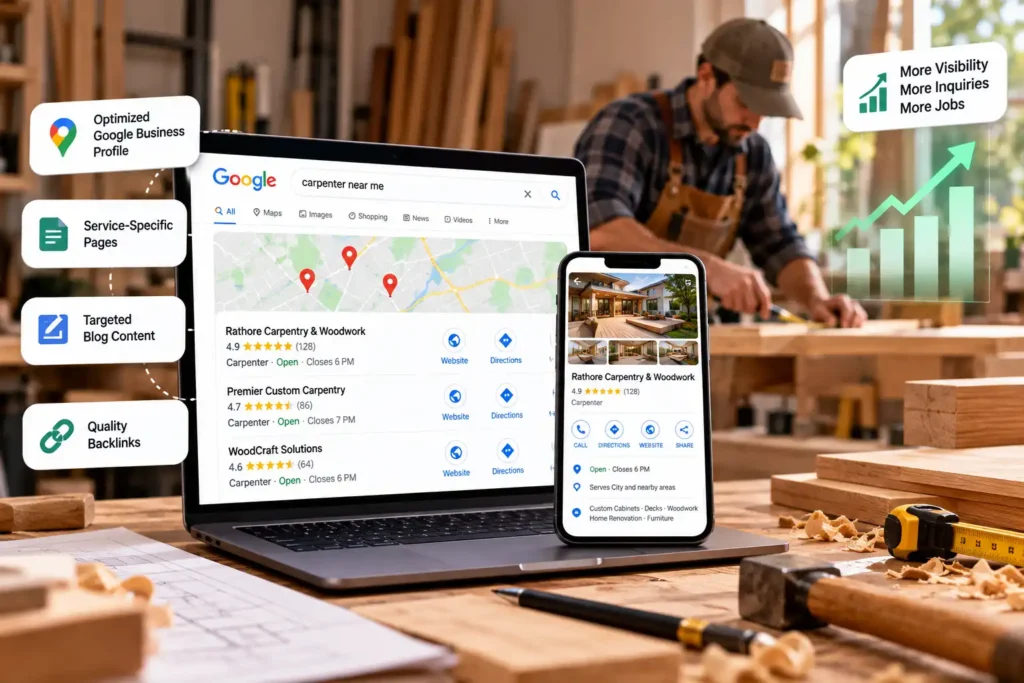
Here’s what actually moves the needle for carpentry leads:
- A comprehensive and accurate Google Business Profile with authentic photos of the projects.
- Provide location-based services pages (as opposed to a single services page)
- Blog articles focused on particular carpentry projects and resources.
- Regular reviews, which serve as a ranking indicator as well
Local SEO and Google Business Profile
A homeowner’s first impression of your Google Business Profile is likely to be the most important. Complete it, filling all the fields, with the correct categories, with a precise service area and with actual photos of completed work instead of images taken from the library. The majority of visibility of local carpentry leads comes from this one listing. This profile’s connection with the reviews is much more important than carpenters realize. Maintain the profile up to date. An antiquated listing quietly skims your calls each week.
Google Ads for Carpenters: Faster Leads While SEO Builds
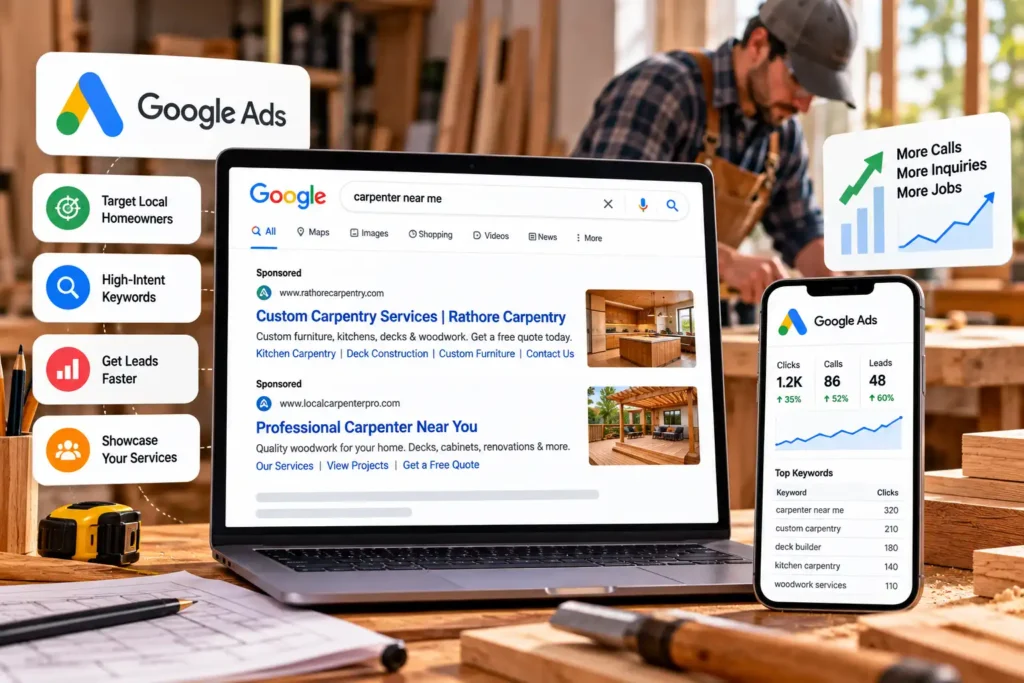
SEO is a long process and will only begin to pay off after a few months. Google Ads for carpenters can begin to drive calls in days! This is what makes the majority of carpentry businesses run both strategies at once, not simply one or the other, and this is what makes it so attractive.
The arrangement is not as complicated as it’s described. You bid on high-intent phrases such as “find carpentry near me” or “custom carpentry [city]” and typically only pay for clicks. The click has to go somewhere, and it would be better if it went to a page created for that service rather than to your homepage. Local Service Ads are another option to consider because they have the “Google Guaranteed” seal and they pay per lead, rather than per click, which some carpenters would prefer because of budgeting. While carpenters continue to build on SEO, Google Ads will fill the gap in the meantime.
Before launching a campaign, get these basics right:
- Define a tight service area so you’re not paying for clicks outside it
- Pick specific keywords tied to real services, not broad terms like “carpenter”
- Set a budget you can sustain for at least a few months
- Write one clear call to action per ad, like “Get a Free Quote”
Facebook Ads for Carpenters: Reaching Homeowners Before They Search
If they are searching, Google Ads can get them. Facebook Ads for carpenters attract people before they are even aware they are searching. That’s the true distinction, and it alters the way you need to consider the two channels. Facebook demographics and location targeting mean you can put your work in front of homeowners in your geographic area who fit your demographic profile, even if they haven’t conducted a single search.
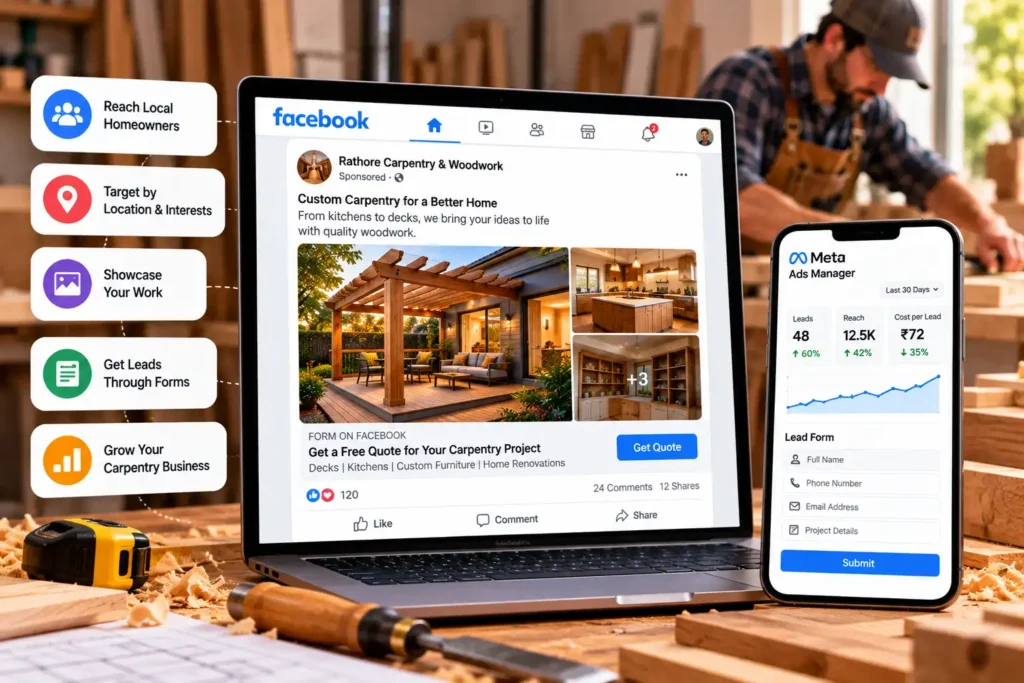
It’s here, more than anywhere else, where creative counts. Before-and-after photos are always better than the same old text ads because they provide the person with visual proof in the first second of scrolling. This is even easier with Facebook and Instagram forms, which allow someone to simply fill out their name and number without having to leave the app. That little bit of friction eliminated can double your response rate. It is a suitable supplement to organic carpentry leads, it is not a replacement.
Keep the ad setup simple:
- Target homeowners in your service area, filtered by age and interests
- Use before-and-after photos or a short project video as the main creative
- End every ad with one clear action, like “Get a Free Quote”
Social Media Marketing for Carpenters: Staying Visible Between Jobs
Paid ads bring in leads right now. Organic social media marketing for carpenters keeps you visible in between. Both matter, but they serve different purposes, and mixing them up is a common mistake.
Visual platforms work best for a trade like this. Instagram, Facebook, and Pinterest all reward the kind of proof carpenters already have sitting on their phones: finished projects, raw materials turning into furniture, a client’s reaction to a new built-in. The platform matters less than the consistency. Posting on three platforms once a month does less than posting on one platform every week. Pick one or two channels and show up regularly, rather than spreading effort thin trying to be everywhere at once. Over time, this steady presence is what turns a one-time client into someone who books more carpentry jobs with you later and refers their neighbor too.
What to Post (and How Often)
Here’s a simple starting list for weekly content:
- Before-and-after shots from a recent job
- A 30-second video of a tricky cut or join
- A quick client quote or short testimonial
- One tip that shows expertise, posted mid-week
Aim for at least two to three posts a week to stay visible without burning out on content.
Email Marketing for Carpenters: Turning Past Clients Into Repeat Business
The majority of carpenter marketing tips are aimed at generating leads and don’t pay any attention to the client list in the inbox. That’s a gap that needs to be closed. Email marketing for carpenters is one of the most cost-effective marketing methods, as you don’t need to pay for clicks or impressions; you have people who already believe in you.
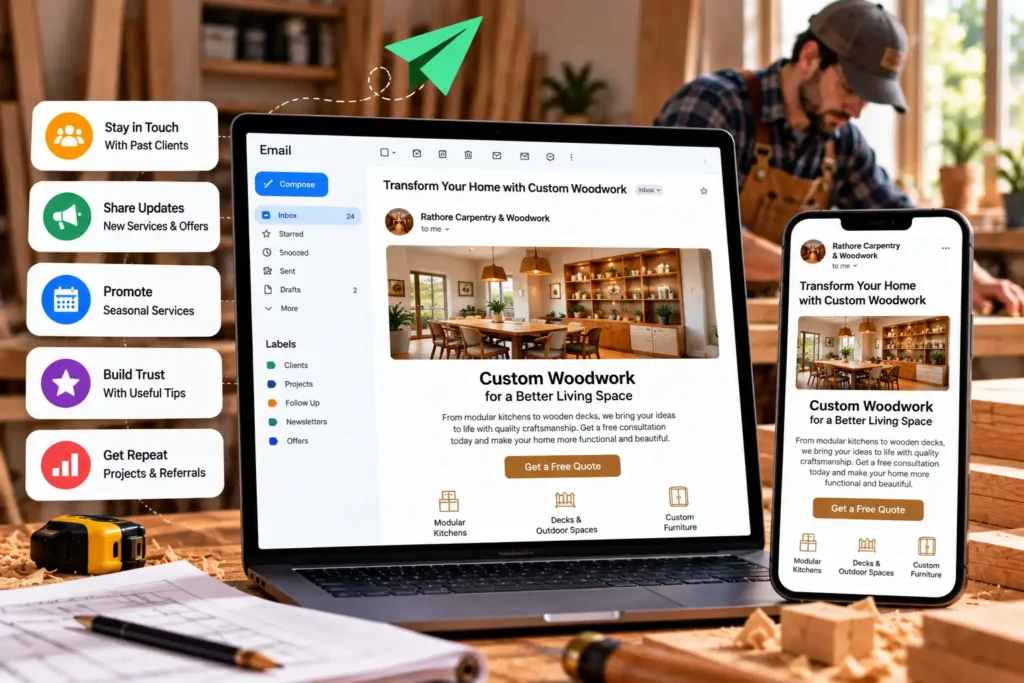
Start simple. It only takes five minutes to send a short email after project completion requesting a review or referral and will not cost anything. Reminders for the season also work well; a note about deck upkeep before summer or custom built-ins before the holidays, for instance. A simple follow-up sequence can bring some of them back into your business if the problem was timing and not price, if someone asked for a quote but didn’t book. While this channel won’t replace new carpentry leads from SEO or paid ads, it’s the most profitable channel for existing customers.
A few emails worth automating:
- A post-project thank-you with a review and referral ask
- Seasonal reminders tied to common carpentry needs
- A short follow-up sequence for quotes that went quiet
Web Development for Carpenters: The Foundation Everything Else Points To
Every strategy above eventually sends someone to your website. If it doesn’t convert once they land, the ad spend and the content effort were wasted. That’s why web development for carpenters deserves real attention, even though it’s easy to treat as a one-time task and forget about.
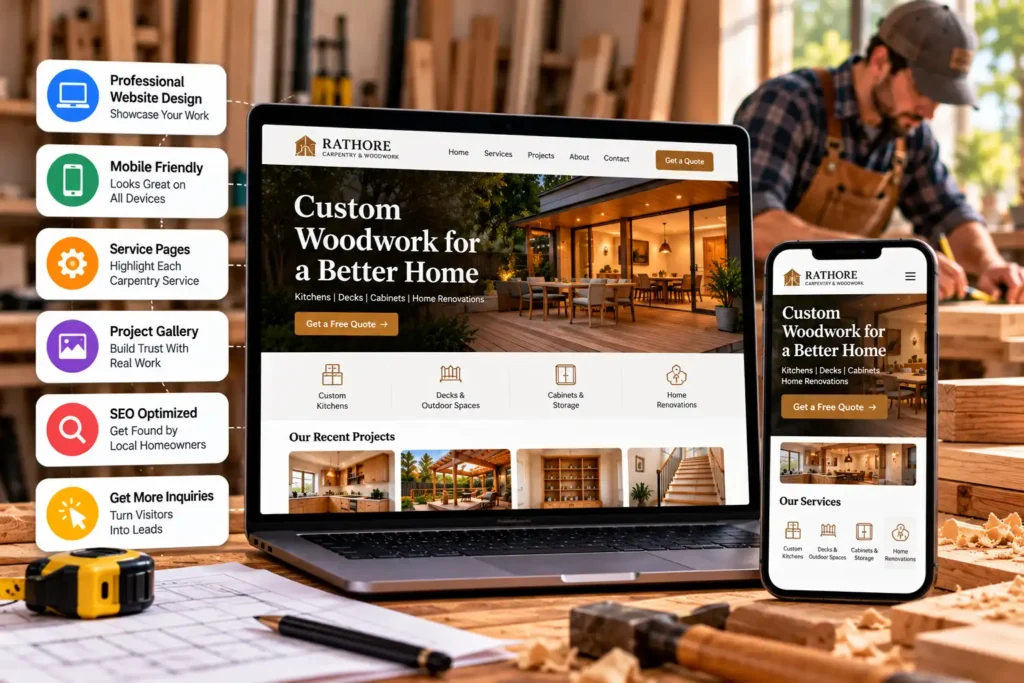
The site itself doesn’t need to be complicated. It needs a handful of things done well: a contact form that’s easy to find, real project photos instead of stock imagery, and clear pages for each service you offer rather than one vague catch-all page. Mobile responsiveness matters more than most carpenters expect, since most local searches happen on a phone in the driveway or the kitchen, not at a desk. Page speed matters too, since a slow site quietly hurts both your SEO rankings and your Google Ads performance. Get this part right, and lead generation for carpenters across every other channel starts converting instead of leaking.
The essentials to check on your own site right now:
- A contact form visible without scrolling
- A before-and-after project gallery
- Mobile-first design, tested on an actual phone
- Separate pages for each core service
- Fast load times, especially on mobile
Let Codestro Build Your Carpentry Lead Generation System
Right now, most carpentry businesses lean on referrals, a handful of paid ads, or a website that hasn’t been touched in years. The problem is that none of these keep working once you stop paying for them or asking for them directly. Referrals slow down. Ads stop the second the budget does.
Codestro builds the organic, long-term version instead, one that keeps producing leads across every channel covered here. That looks like:
- Local SEO that gets you found before a homeowner calls anyone else
- Google Ads campaigns built around real service-area intent, not guesswork
- Facebook Ads using your actual project photos as the creative
- A social media presence built for consistency, not just posting for the sake of it
- Email follow-ups that turn one job into three referrals
- A website built to convert every visitor these strategies send its way
Codestro is a carpentry marketing team worth checking out if you’re ready to stop relying on luck. R
Book a free strategy call on Codestro’s Calendly, or reach out directly at info@codestro.com.
Key Takeaways
Lead generation for carpenters works best as a system, not a single tactic. Here’s what to start this week:
- Claim and complete your Google Business Profile
- Launch a small, tightly targeted Google Ads campaign
- Run one Facebook Ad using real project photos
- Post consistently on one or two social platforms
- Send a follow-up email after every completed project
- Fix your website’s contact form and mobile experience first
Frequently Asked Questions
Google Ads and Facebook Ads work fastest, often within days. SEO takes longer, usually two to three months, but keeps working without ongoing ad spend once it ranks. Most carpenters run paid ads and SEO together for quick results now and steady leads later.
It depends on your market and goals, but many carpentry businesses start with $500 to $1,500 a month across Google Ads and Facebook Ads. Track cost per lead closely for the first few months. Adjust the budget once you know which channel actually books jobs, not just clicks.
Yes, especially for local search. Most homeowners search online before calling anyone, and a strong Google Business Profile alone can bring in steady calls without ad spend. SEO takes patience, but it keeps generating carpentry leads long after a paid campaign would have stopped.
Instagram and Facebook tend to perform best, since both reward visual proof like before-and-after project photos. Pinterest works well for renovation and custom furniture work specifically. Pick one or two platforms and post consistently, rather than spreading effort across every platform at once.
Yes. Referrals still send people to Google to check reviews and past work before they call. Without a website, that search often ends with a competitor instead. A simple site with a contact form and real project photos protects the referrals you’re already getting.